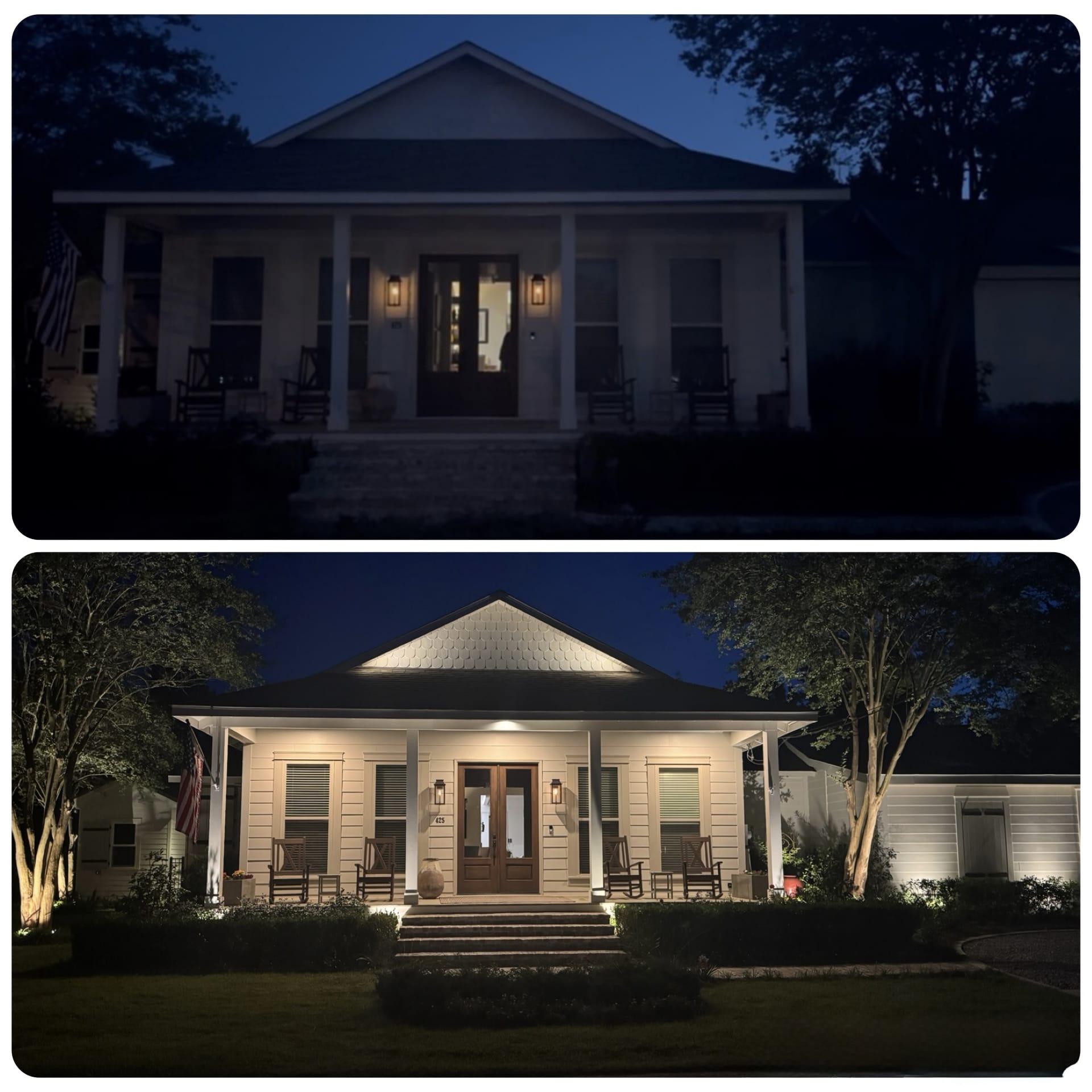
The Complete Guide to Landscape Lighting for Louisiana Homes
Landscape lighting can change the way a Louisiana home feels after sunset, especially when the design is planned around the way people actually live outdoors here. Between warm evenings, wide porches, mature trees, outdoor kitchens, garden paths, and long seasons of backyard use, the right lighting does far more than make a house visible at night.
Why Does Landscape Lighting Matter in Louisiana?
Louisiana homes often feature mature trees, distinctive architecture, lush landscaping, and outdoor living areas, making thoughtful landscape lighting especially effective at highlighting those details without making the yard look overdone.
Good landscape lighting also stretches the use of outdoor spaces, which matters in a state where patios, courtyards, pool areas, and covered porches often function like extra rooms. When the sun goes down, a well-lit yard can still feel comfortable enough for family dinners, quiet evenings, weekend gatherings, or simple walks from the driveway to the front door.
Landscape Lighting Improves Safety Without Making Your Yard Look Harsh
Safety is one of the biggest reasons homeowners start thinking about outdoor lighting, although the finished result does not need to look like a security spotlight. Low-voltage path lights, step lights, and carefully aimed fixtures can make walkways, driveways, stairs, and uneven ground easier to navigate without washing the whole property in glare.
This is especially helpful in Louisiana, where rain, tree roots, shifting soil, and darker shaded areas can make outdoor surfaces harder to see at night. When lighting is placed with care, guests can move around more confidently, deliveries are easier to manage, and the home feels more welcoming from the moment someone pulls up.
Curb Appeal Starts at the Street
A home may look beautiful during the day, yet disappear after sunset if the lighting is limited to a porch bulb and a garage fixture. Landscape lighting brings back the depth, texture, and shape of the property, allowing architectural features, planting beds, trees, and hardscapes to stand out after dark.
For many Louisiana homes, curb appeal comes from warmth rather than brightness. Soft uplighting on trees, gentle illumination along a front path, and subtle accents on brick, stucco, or columns can make the property feel finished without making it look commercial or overly staged.
What Types of Landscape Lighting Work Best?
Path lighting is one of the most familiar options because it guides people along sidewalks, garden paths, and driveways. The best path lights do not simply line up like runway markers, though, since a more natural layout usually creates better rhythm, softer shadows, and a more comfortable view.
Uplighting is another popular choice, especially for large trees, palms, columns, and textured walls. When the angle and brightness are right, uplighting adds height and drama while still feeling refined, which makes it a strong choice for Louisiana homes with mature landscaping or standout architectural features.
Accent lighting is used when a homeowner wants to draw attention to a specific feature, such as a fountain, statue, garden bed, outdoor fireplace, or entryway. Since accent lighting can become distracting when overused, LIT Outdoor Lighting focuses on balance, which means the eye moves naturally through the space rather than bouncing from one bright spot to another.
Your Outdoor Living Areas Deserve Their Own Lighting Plan
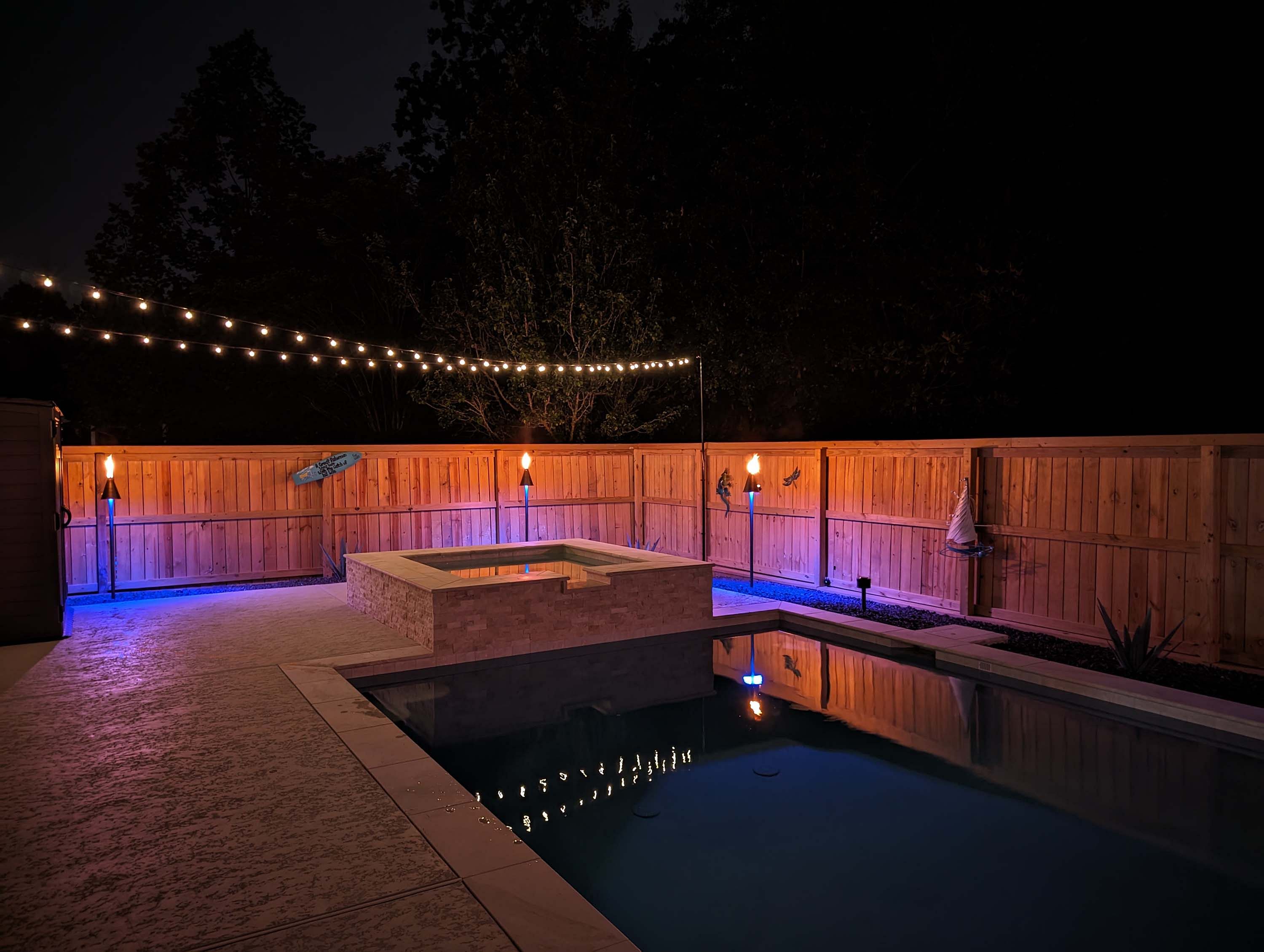
Patios, decks, pergolas, outdoor kitchens, and poolside spaces need a different approach than front yards because people spend time there, not just pass through. Lighting in these areas should support conversation, cooking, dining, relaxing, and moving around without shining directly into people’s eyes.
Layered lighting usually works best for outdoor living spaces because one fixture type rarely does everything well. A combination of downlighting, subtle perimeter lighting, step lighting, and carefully placed accent fixtures can create a comfortable setting that feels useful and relaxed at the same time.
How Bright Should Landscape Lighting Be?
Many homeowners assume that brighter lighting is better, but outdoor lighting often looks best when it is restrained. The goal is not to make the yard look like daytime; the goal is to create enough visibility, depth, and atmosphere for the space to feel safe and attractive.
Brightness should depend on the purpose of each area. A front step needs enough light to prevent trips, a tree may need just enough illumination to reveal its shape, and a patio may need a softer glow that allows people to enjoy the evening without feeling like they are under a floodlight.
Warm Light Usually Looks Best on Louisiana Homes
Color temperature plays a major role in how landscape lighting feels, even though many homeowners do not think about it at first. Warm white light generally works well for Louisiana homes because it complements brick, stucco, wood, stone, greenery, and traditional Southern architecture.
Cooler light can look sharp in certain modern designs, yet it may feel sterile or too blue when used around porches, gardens, and older homes. LIT Outdoor Lighting helps homeowners choose a tone that fits the property, the landscaping, and the mood they want to create after dark.
Why Fixture Placement Matters More Than Fixture Count
A strong landscape lighting design is not about using as many fixtures as possible. It is about putting the right fixtures in the right places, with the right beam spread, angle, height, and brightness.
Poor placement can cause glare, dark gaps, uneven lighting, or fixtures that shine into windows and seating areas. Careful placement, on the other hand, can make a smaller number of lights feel more effective because each one has a clear job and contributes to the overall design.
Louisiana Weather Should Shape the Lighting System
Outdoor lighting in Louisiana has to deal with heat, humidity, heavy rain, storms, insects, wet soil, and fast-growing plants. Because of that, fixture quality, wiring methods, transformer placement, and installation details matter just as much as the way the system looks on the first night.
A lighting setup that is not designed for local conditions may start having problems sooner than expected. Professional installation helps reduce those issues by using outdoor-rated components, thoughtful wire runs, solid connections, and fixture placements that account for drainage, landscaping, and future maintenance.
Can Landscape Lighting Help With Home Security?
Landscape lighting can support home security by reducing dark hiding spots and making doors, pathways, driveways, and side yards easier to see. While lighting is not a complete security system by itself, it can make a property feel more active, visible, and cared for after dark.
The best security-minded lighting still needs to look good because overly harsh fixtures can make a home feel less comfortable. A balanced design can improve visibility around key areas while preserving the warm, inviting look that homeowners want.
Trees, Gardens, and Water Features Need a Gentle Touch
Louisiana landscapes often include layered planting beds, palms, oaks, crepe myrtles, ferns, hedges, and water features, which means lighting should be designed with movement and texture in mind. A single bright fixture may flatten these elements, while softer lighting from multiple angles can reveal depth and shape.
Water features need special care because reflections can either look beautiful or distracting depending on the fixture angle. When done correctly, lighting around fountains, ponds, and pools adds motion and atmosphere without creating glare across the water.
Professional Design Prevents Common Lighting Mistakes
One common mistake is placing lights too evenly, which can make a yard feel stiff instead of natural. Another is using fixtures that are too bright, placed too close together, or aimed directly where people sit, walk, or look from inside the home.
Professional design helps avoid those problems because the layout is based on how the property functions, not just where fixtures can be installed. LIT Outdoor Lighting looks at the home’s architecture, landscape features, walkways, outdoor living areas, and sightlines before creating a plan that feels complete.
Energy Efficiency Makes Modern Lighting Practical
Modern LED landscape lighting gives homeowners the ability to create beautiful outdoor spaces without the energy use associated with older systems. LEDs also offer long life, consistent performance, and a wide range of fixture styles, which makes them practical for both small homes and larger properties.
Energy efficiency does not mean sacrificing beauty. With the right design, a low-voltage LED system can provide the warmth, visibility, and depth homeowners want while keeping the system manageable and cost-conscious over time.
Maintenance Keeps the System Looking Its Best
Even a well-installed lighting system benefits from occasional maintenance because landscapes change constantly. Plants grow, mulch shifts, soil settles, storms move debris, and fixtures can be bumped by lawn equipment or hidden by new growth.
Routine maintenance may include adjusting fixture angles, cleaning lenses, checking connections, trimming around lights, replacing damaged parts, and reviewing whether the system still fits the landscape. This matters in Louisiana because growing seasons are long, and a fixture that looked perfect in spring may need adjustment by late summer.
How Do You Know Where to Start?
The best starting point is to think about how the property is used after dark. A homeowner may want safer walkways, better curb appeal, a more comfortable patio, improved poolside lighting, or a front yard that finally shows off the home’s best features at night.
Once the main goals are clear, the design can be built in a way that feels intentional rather than random. LIT Outdoor Lighting can help homeowners sort through those priorities, explain what will make the biggest difference, and design a system that fits both the home and the way the family uses the space.
Landscape Lighting Should Feel Like Part of the Home
Great landscape lighting does not call attention to itself first. Instead, it makes the home, trees, garden, entryway, and outdoor living areas look better, while the fixtures quietly do their job in the background.
For Louisiana homeowners, that kind of lighting can make everyday life feel easier and more enjoyable. Whether the goal is a safer front path, a more welcoming entry, a backyard built for evening gatherings, or a full-property lighting design, LIT Outdoor Lighting can create a system that feels natural, polished, and made for the home.
Bring Your Louisiana Home to Life After Dark
LIT Outdoor Lighting works with Louisiana homeowners who want outdoor lighting that is attractive, durable, and designed with purpose. When your home deserves more than a few basic fixtures, a professional landscape lighting design can help every important feature shine in the right way.
Latest Posts
Let Us Know About Your Project
Contact Details

Service Areas
Serving all of Southeast Louisiana including:
ST. TAMMANY PARISH
-
Lacombe
-
Pearl River
-
Folsom
-
Sun
-
Eden Isle and Bush
TANGIPAHOA PARISH
-
Amite
-
Hammond
-
Ponchatoula
-
Kentwood
-
Independence
-
Tickfaw
-
Roseland
-
Loranger
-
Natalbany