Services
Hardscape Lighting in Covington, Louisiana
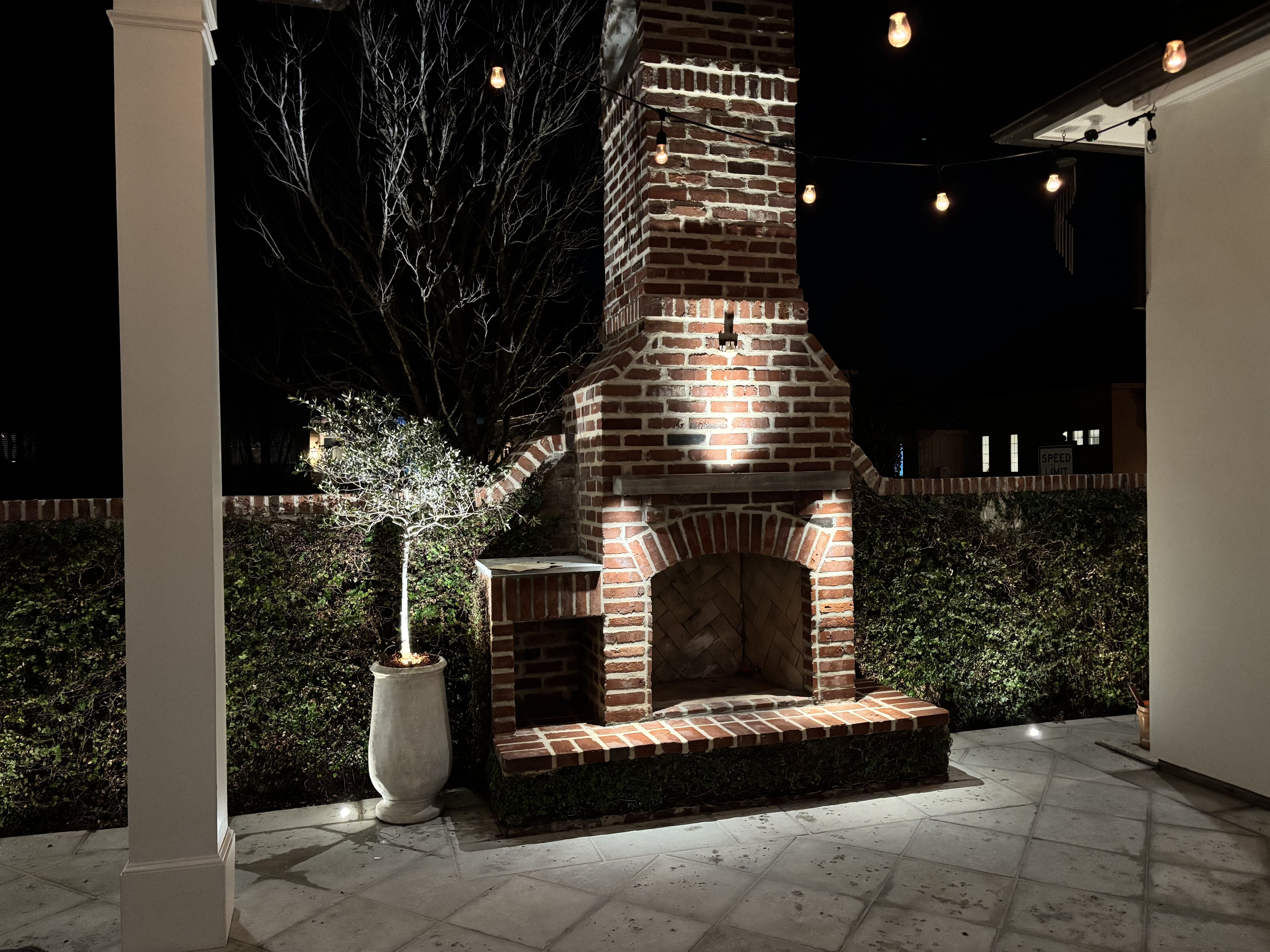
Lighting Set Into Your Patio, Steps, and Walls

Covington, LA
Use Your Patio After Dark
Most people call us about hardscape lighting for the same reason. They spent real money on a patio, an outdoor kitchen, or a set of steps down into the yard, and by eight o'clock nobody goes out there. You can't see the edge of the top step. You can't make out the seating wall you had built. Nobody uses the back of the house once the sun goes down.
That's what we fix. We're lighting designers and professional installers both, so we start with how you actually use the space, then we work out where the light has to come from. We set small fixtures into the stone, the concrete, and the risers, and once they're in, you stop noticing the fixtures and start noticing the patio.
What Hardscape Lighting Changes
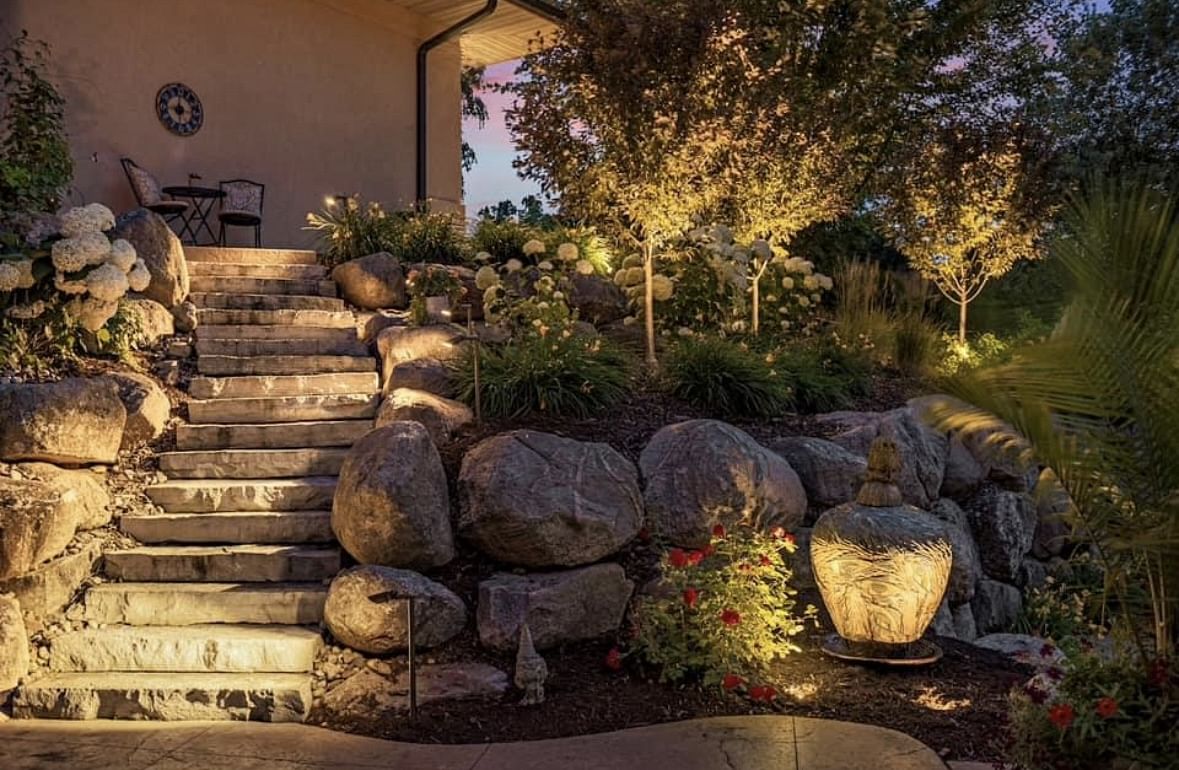
Hardscape lighting means the light is part of the structure. We install it in the risers of your steps, under the caps of a retaining wall, along the edge of a paver walkway, and into the concrete around a fire pit or a pool deck. The light comes from below eye level and lands where you walk and where you sit, so nobody at the table is staring into a bright fixture.
That's a different job from lighting your trees and flower beds, which is where most of our work starts. The two go together on almost every property we design. Out past the patio we use yard lighting to give you depth and shape, and closer in, the built-in fixtures keep the surfaces you're standing on usable.
Why the Plan Comes First
Plenty of companies will put lighting on a patio. Most of the time that means a few path lights along the walkway and a couple of up lights on the house. A full design takes in more: second-story lights, downlighting from above, lights set into concrete, dock and pool lighting where the property has them. On a hardscape job, the questions we're working through are how deep the patio is, where you sit, which steps you use at night, and how the stone takes light.
We answer those on site, and we come back after dark to check them. That's the design work you're paying for, and it's why two patios with the same fixtures can end up looking nothing alike.
Where Path Lighting Fits In
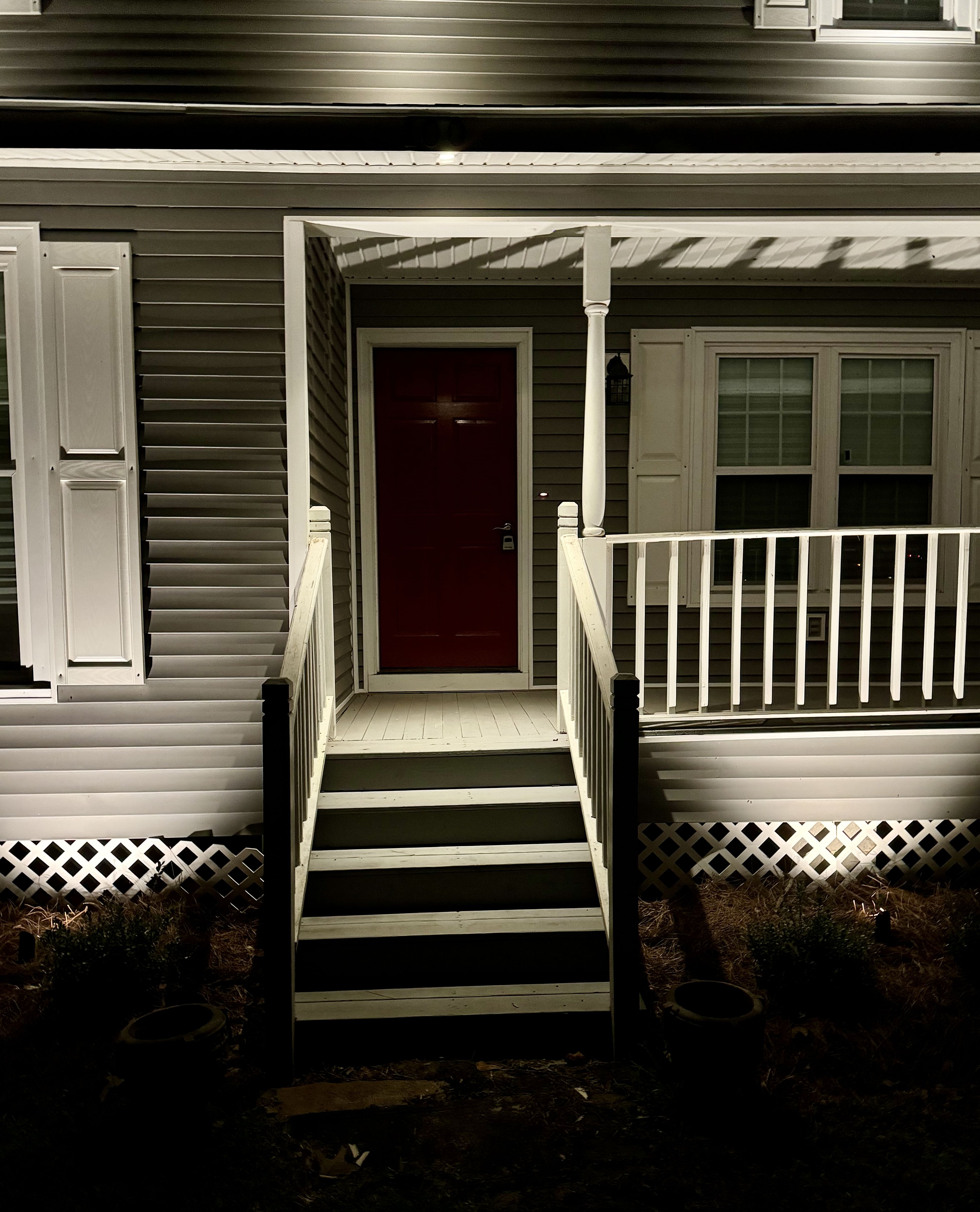
Hardscape fixtures handle the built surfaces. The walk from the driveway to the front door, or from the patio out toward the water, usually needs something different: low fixtures set beside the walkway in the flower beds. We combine the two on most properties, because you want the built-in lights across the patio and the path lights the rest of the way.
Serving the Northshore and Southshore
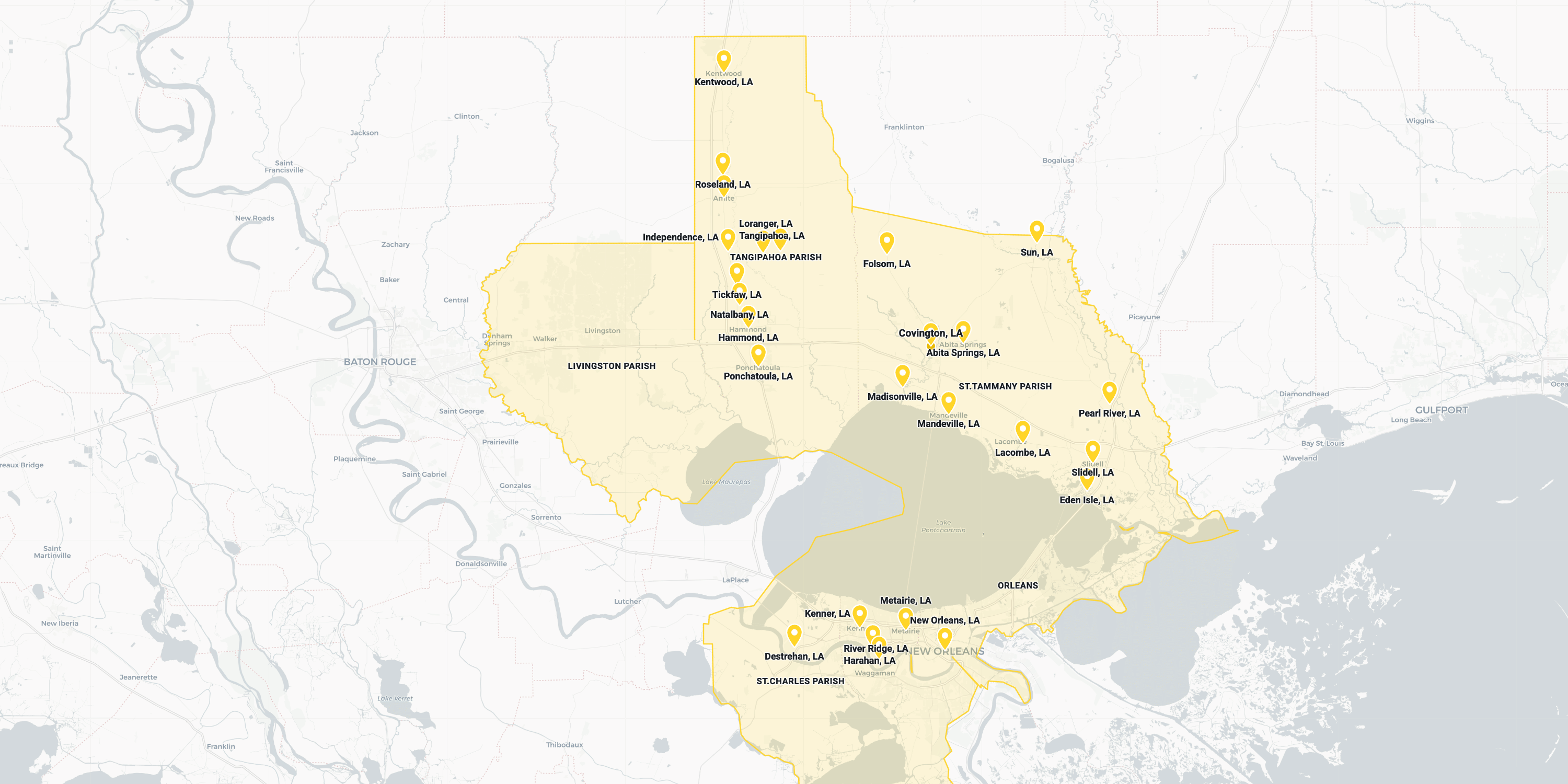
We're based in Covington, so most of this work is a short drive for us. We design and install hardscape lighting across St. Tammany Parish, in Mandeville, Madisonville, Abita Springs, and Slidell, and west into Tangipahoa around Hammond and Ponchatoula. A good bit of it lands in neighborhoods like Beau Chêne and The Sanctuary in Mandeville, Money Hill in Abita Springs, and Oak Harbor in Slidell, where the patios and outdoor kitchens run big enough that lighting them well takes a real plan rather than a few fixtures.
What We Light on a Hardscape Job
Every property is laid out differently, so the fixture list changes from job to job. These four are the ones that come up on nearly every hardscape design we do.
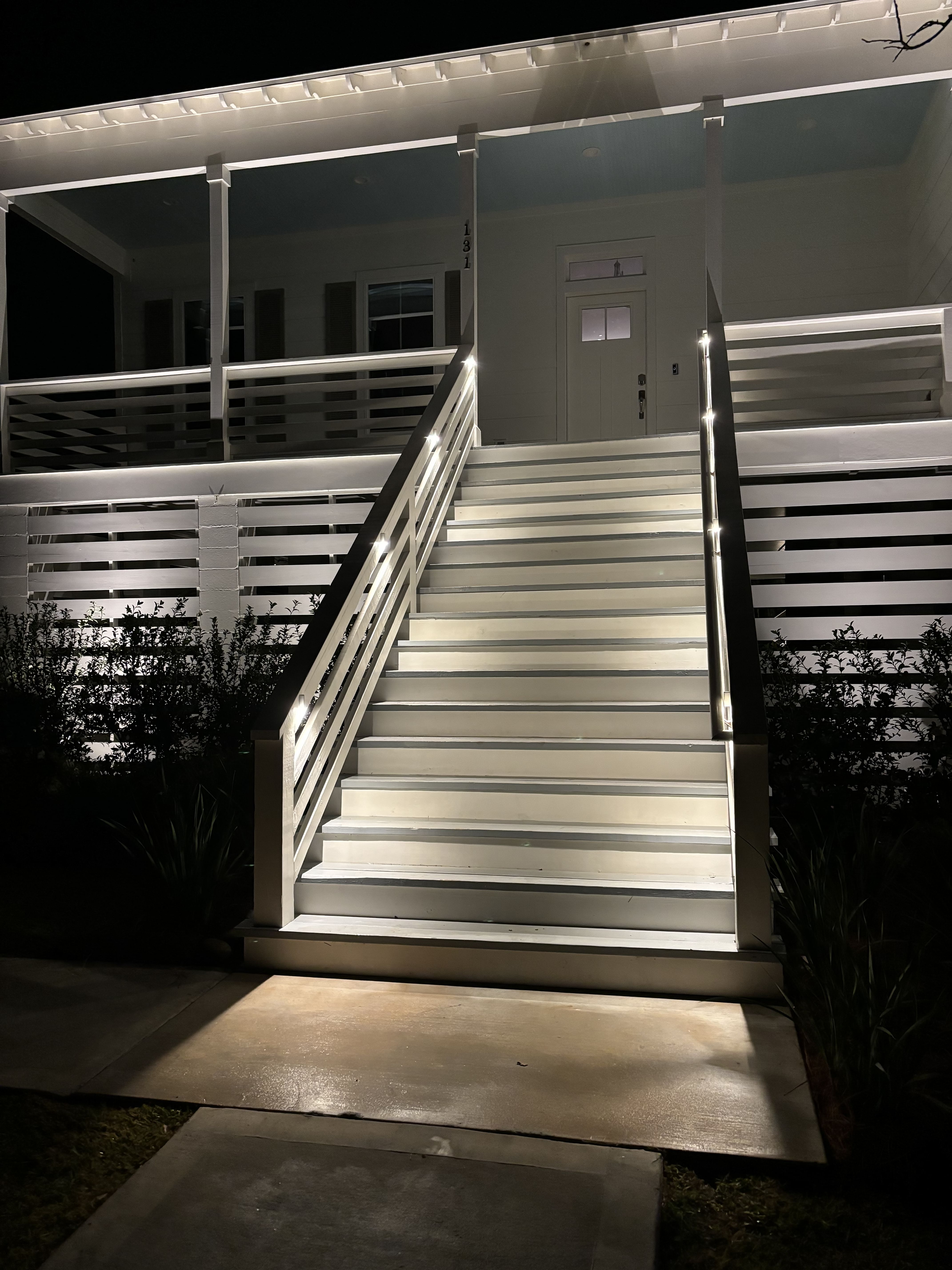
Steps and Stair Risers
Path lighting around Covington homes works best when it guides without glare, which means careful spacing and shielding so the light lands on the ground, not in your eyes. A good path layout also clarifies edges near steps and transitions, which improves safety without changing the character of the landscape. This type of lighting is often the first upgrade homeowners notice daily, because it affects every arrival and departure.
Retaining and Seating Walls
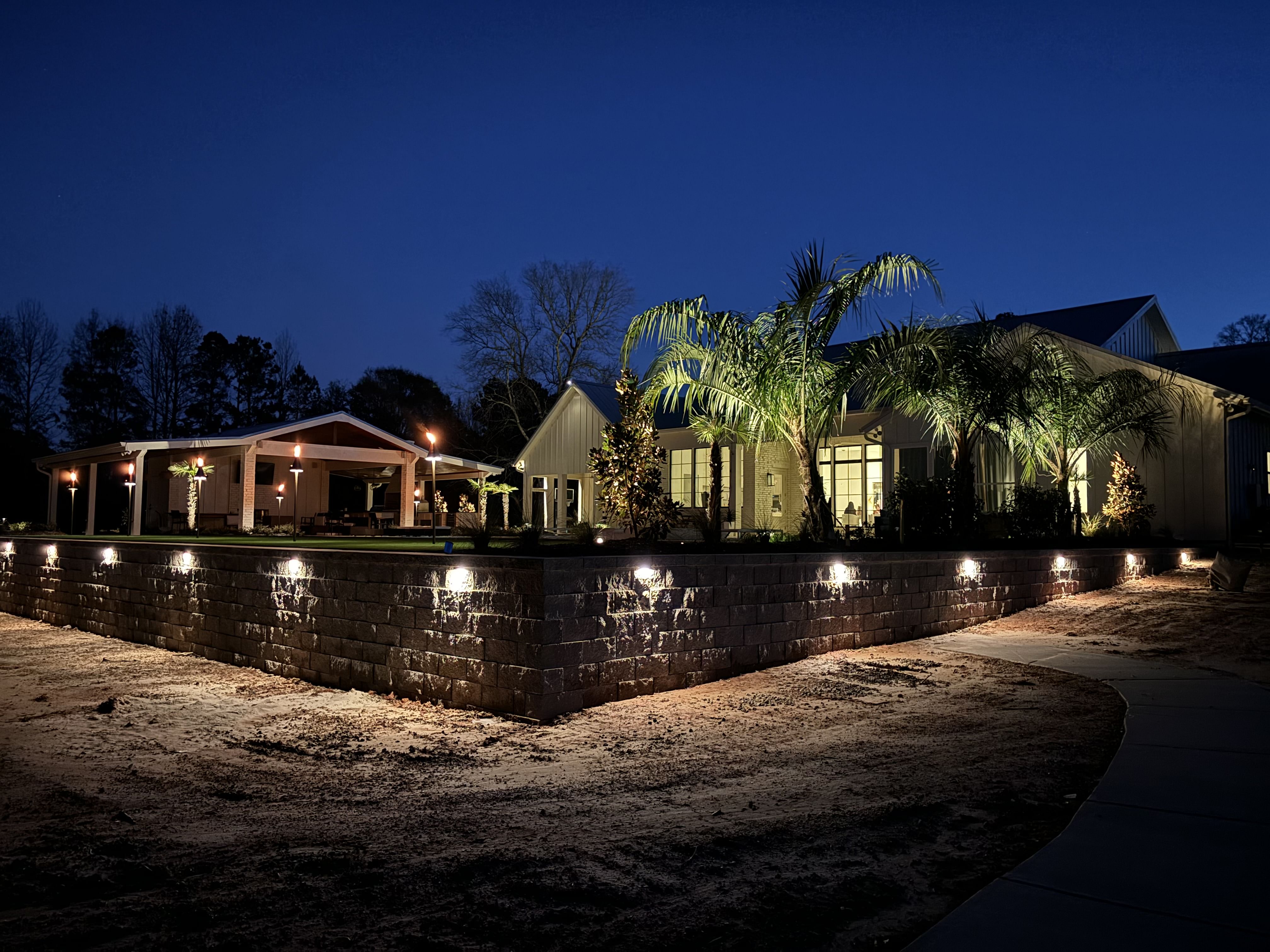
Light tucked under a wall cap washes down the face of the stone and puts a soft glow at seat level. You get the shape of the wall after dark, and you get enough light to sit and talk without a fixture in your eyes.
Paver Edges and Walkways
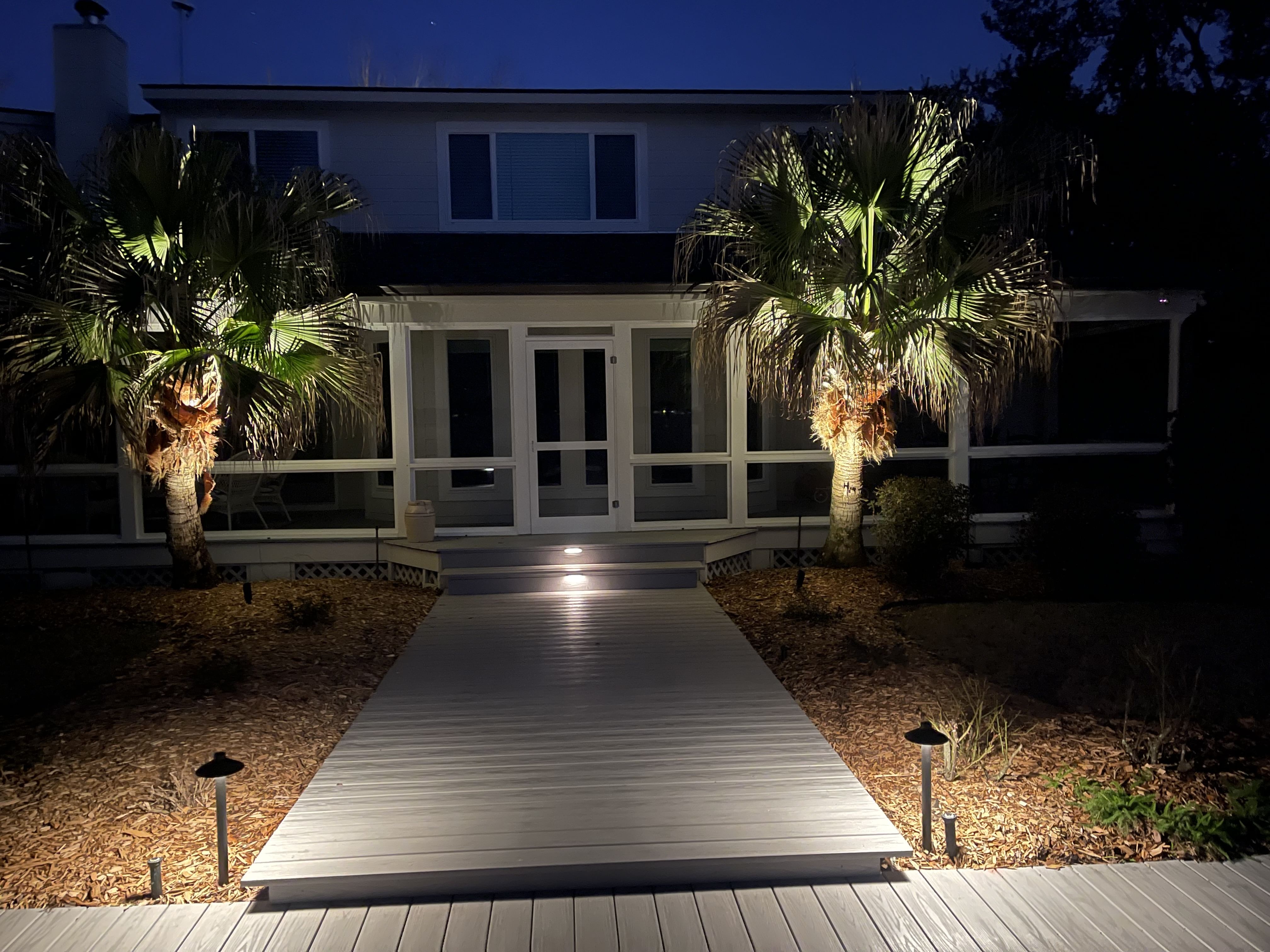
Along a paver patio or a wide walk, we run low fixtures at the edge to mark where the surface ends. That keeps people on the pavers instead of stepping off into the flower beds.
Fire Pits, Kitchens, and Pool Decks
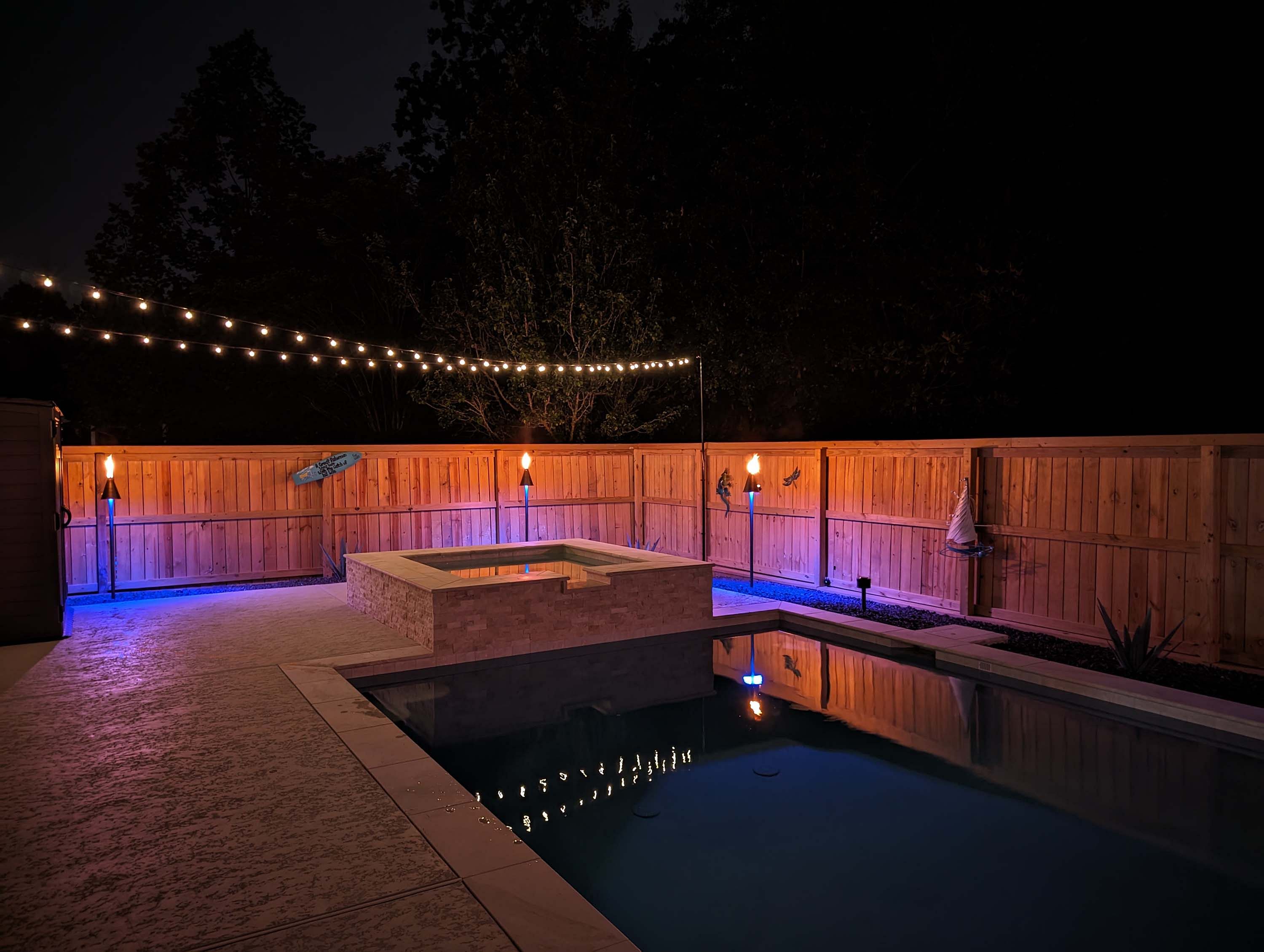
Around a fire pit, an outdoor kitchen, or the concrete surround of a pool, we light work surfaces and walking surfaces separately. You want to see the counter you're cooking on, and you want the deck lit without glare off the water.
How a Hardscape Project Goes
Every job runs through the same four stages, whether we're lighting one set of steps or a whole back yard.
1
Initial Consultation
Schedule a free consultation and walk the property with us. Tell us how you use the patio and what stops you from using it at night.
2
Custom Design
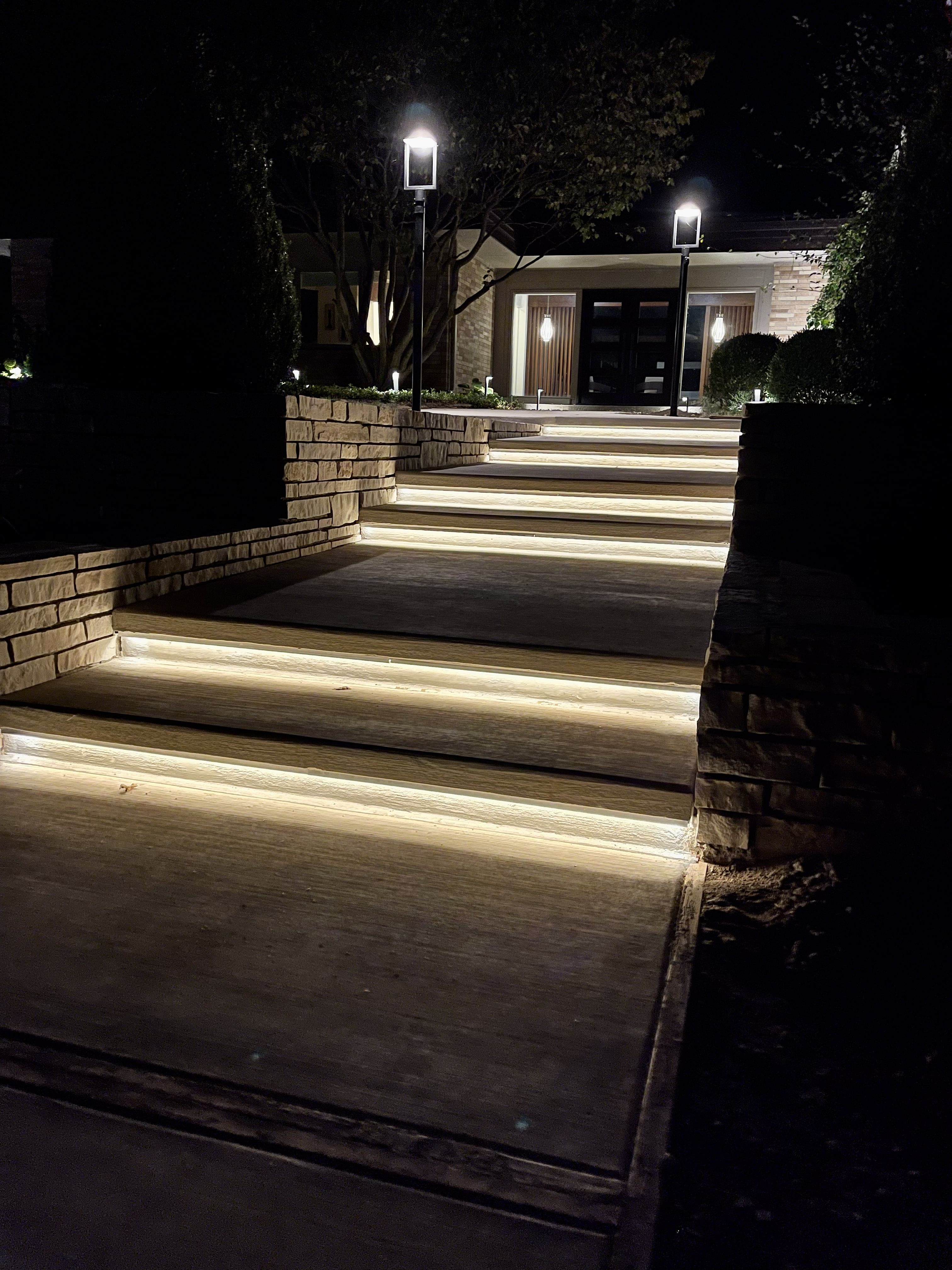
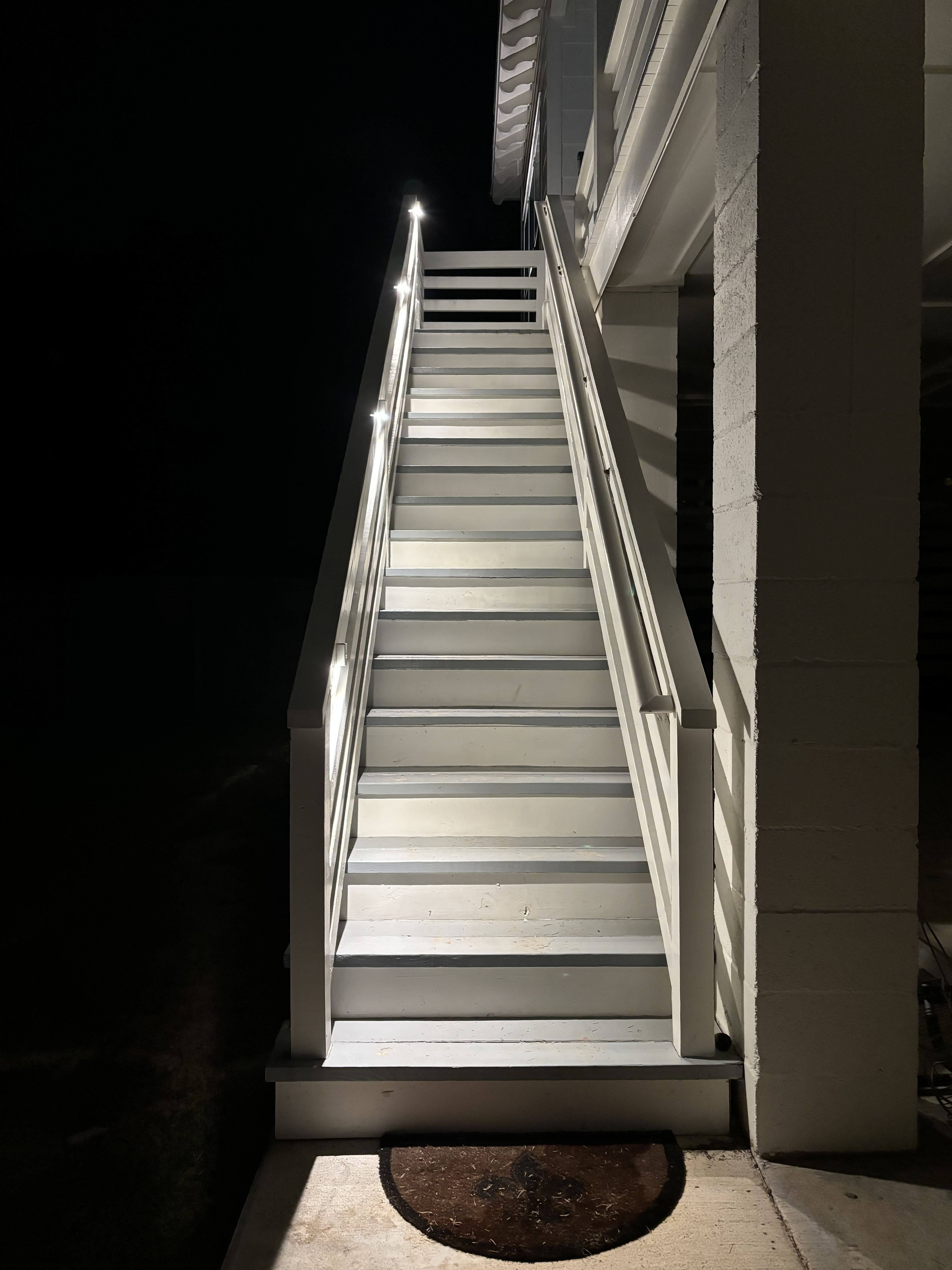
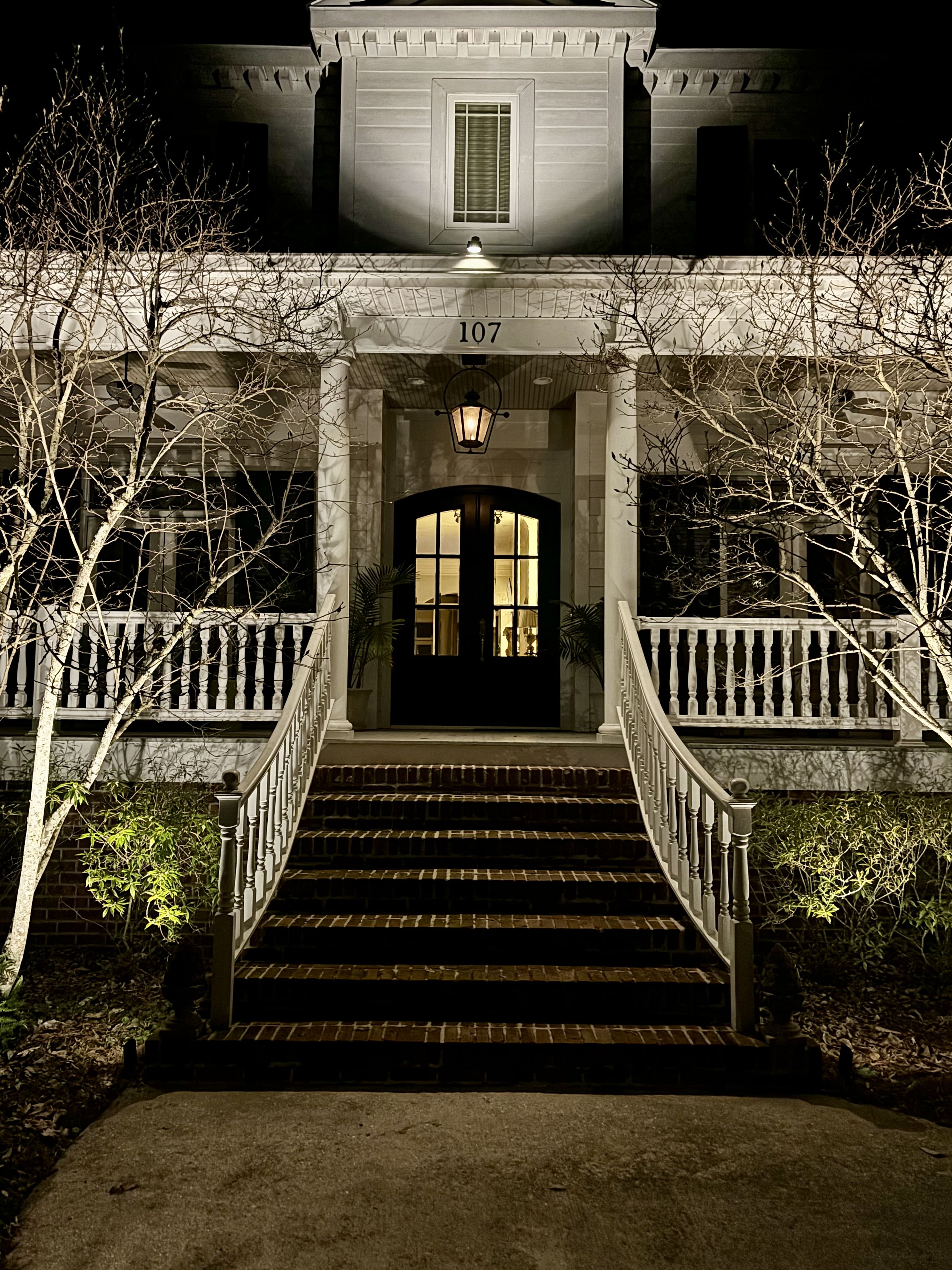
We set small fixtures into the risers so you can see each tread as you come down. On a set of steps between a raised patio and the yard, this is usually the first thing we plan and the change you notice most.
3
Finalize Layout
You look over the plan and settle on the look you want. We'll tell you straight if something won't work the way you're picturing it.
4
Installation
We install the system, then we come back after dark to aim and adjust every fixture. That last visit is where the design actually lands.
Connections That Hold Up
The part of a hardscape install you'll never see is the part that decides how long it lasts. We don't use wire nuts anywhere in a system, because they're destined to fail once water finds them. Every connection we make is water-tight and can't be pulled apart.
That matters more on hardscape than anywhere else in a yard. These fixtures sit low in stone and concrete, in soil that stays wet for days after a hard rain, and getting to a bad connection later can mean pulling up paving.
Fixtures and Controls
We install commercial-grade fixtures only. The lights sold for weekend projects at the local stores are built to a different standard, and in this climate the difference shows up within a season or two.
We set the system on a timer so it comes on and goes off on its own, and we'll show you how to change it. Different areas can run on different schedules if that suits the way you use the space.
Safety on Steps and Level Changes
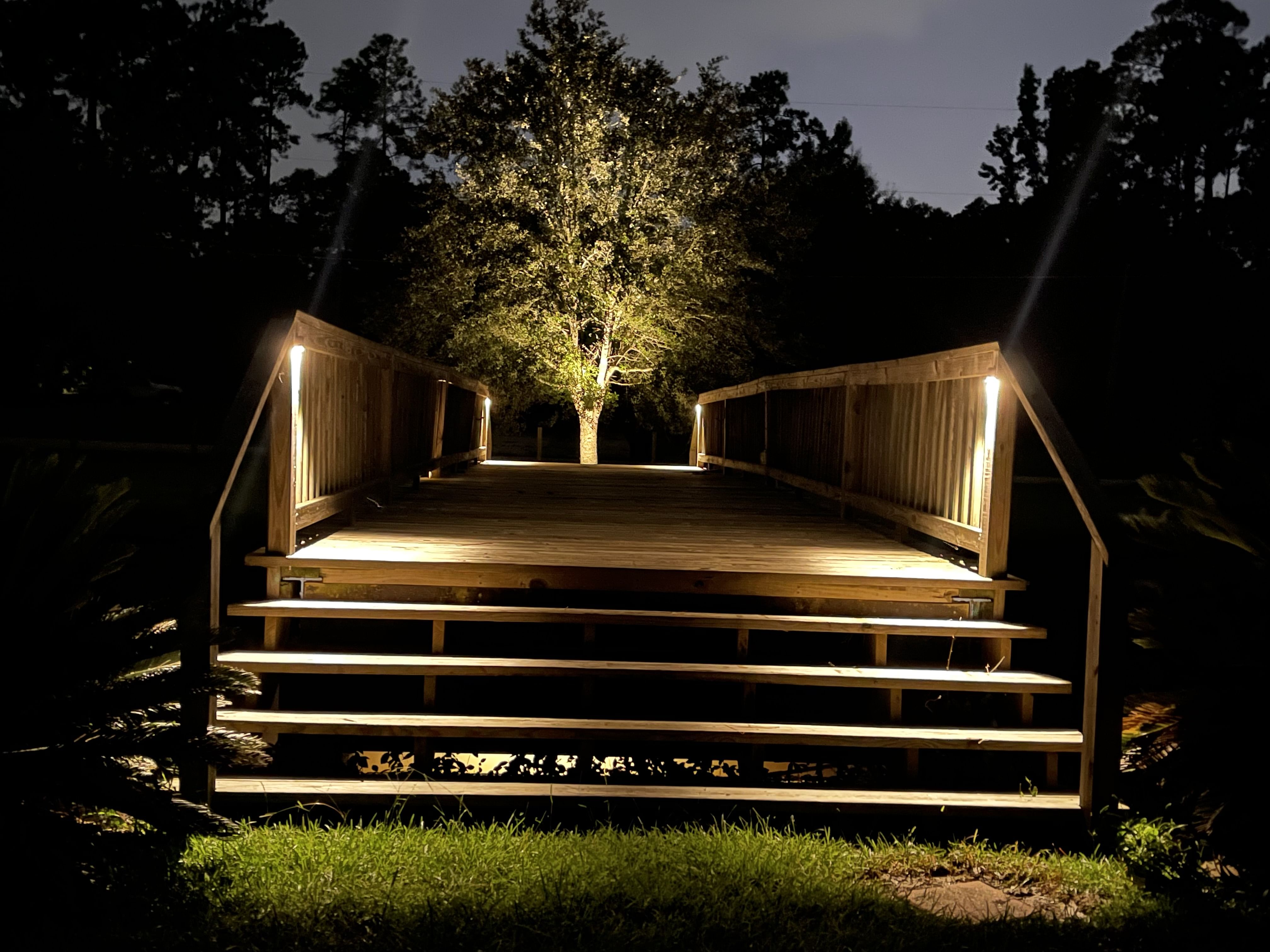
Anywhere the ground level changes, someone can misjudge it in the dark. Steps down from a raised patio, a single riser at a doorway, the drop at the edge of a pool deck: those are the spots we light first, before anything decorative.
The goal is that a guest who has never been to your house can walk out to the patio and back without thinking about their feet. That walk is one of the things we check on the nighttime visit.
Keeping Glare Out of Your Eyes
A fixture at ankle height sits directly in your line of sight when you're seated, so aim and shielding matter as much as placement. We tuck fixtures under caps and lips and point them at surfaces rather than at people. Water complicates it, since a pool or a wet patio throws light back up, and we set angles with that in mind.
Keeping the System Right
A hardscape system needs very little once it's in. Lenses pick up film, mulch and grass creep over a fixture set low in a flower bed, and a timer drifts after a power outage. We handle that upkeep on the systems we install.
What You Get Out of It
Here's what changes on a property once the hardscape lighting is in and adjusted.
A Patio You Use at Night
The space you paid to build becomes somewhere you actually sit after dinner, most of the year.
Steps You Can See
Every level change on the property is lit, so nobody is feeling for the next tread in the dark.
Light That Stays Out of Your Eyes
Shielded, aimed fixtures put light on the stone and the walkways instead of into the faces of the people sitting there.
A System Built to Last
Commercial-grade fixtures and water-tight connections, installed so you're not digging into your own hardscape later.
One Plan for the Whole Property
The hardscape lighting is designed alongside the trees, the flower beds, the house, and the water, rather than bolted on afterward.
Frequently Asked Questions
These are the questions homeowners ask us most often when they're thinking about lighting a patio, a wall, or a set of steps.
Yes, and that's most of what we do. There are more options when lighting is planned alongside new stonework, but on a finished patio we can still light risers, wall caps, paver edges, and the surround of a fire pit or pool without tearing everything out.
Hardscape lighting is set into the built surfaces themselves, so the fixture is part of the step, the wall, or the concrete. Path lighting sits beside a walkway on a small stem. Most properties use both, in different places.
Yes, and the aim is that it's bright enough without being harsh. Low, shielded fixtures on each riser give you a clear read of where the tread is. We check every step after dark on the adjustment visit and change anything that's too dim or too strong.
That's what the commercial-grade fixtures and the water-tight connections are for. Heat, humidity, hard rain, and standing water are exactly the conditions that find a weak connection or a thin housing, so we build for them from the start.
Yes. Those areas usually go together, and they're often designed in the same pass as the patio and the steps. The lighting around water gets planned with reflection and glare in mind.

Areas We Serve Across Louisiana
-
Amite
-
Eden Isle and Bush
-
Folsom
-
Hammond
-
Natalbany
-
Pearl River
-
Ponchatoula
-
Independence
-
Kentwood
-
Lacombe
-
Loranger
-
Roseland
-
Sun
-
Tickfaw
Ready to See Your Patio at Night?
Give retaining walls, steps, patios, walkways, and other outdoor features the attention they deserve with professionally installed hardscape lighting. LIT Outdoor Lighting designs durable, attractive systems that improve visibility while adding warmth and dimension to your property. Contact us today to schedule a consultation and discover the right lighting plan for your outdoor space.
Let Us Know About Your Project
Contact Details