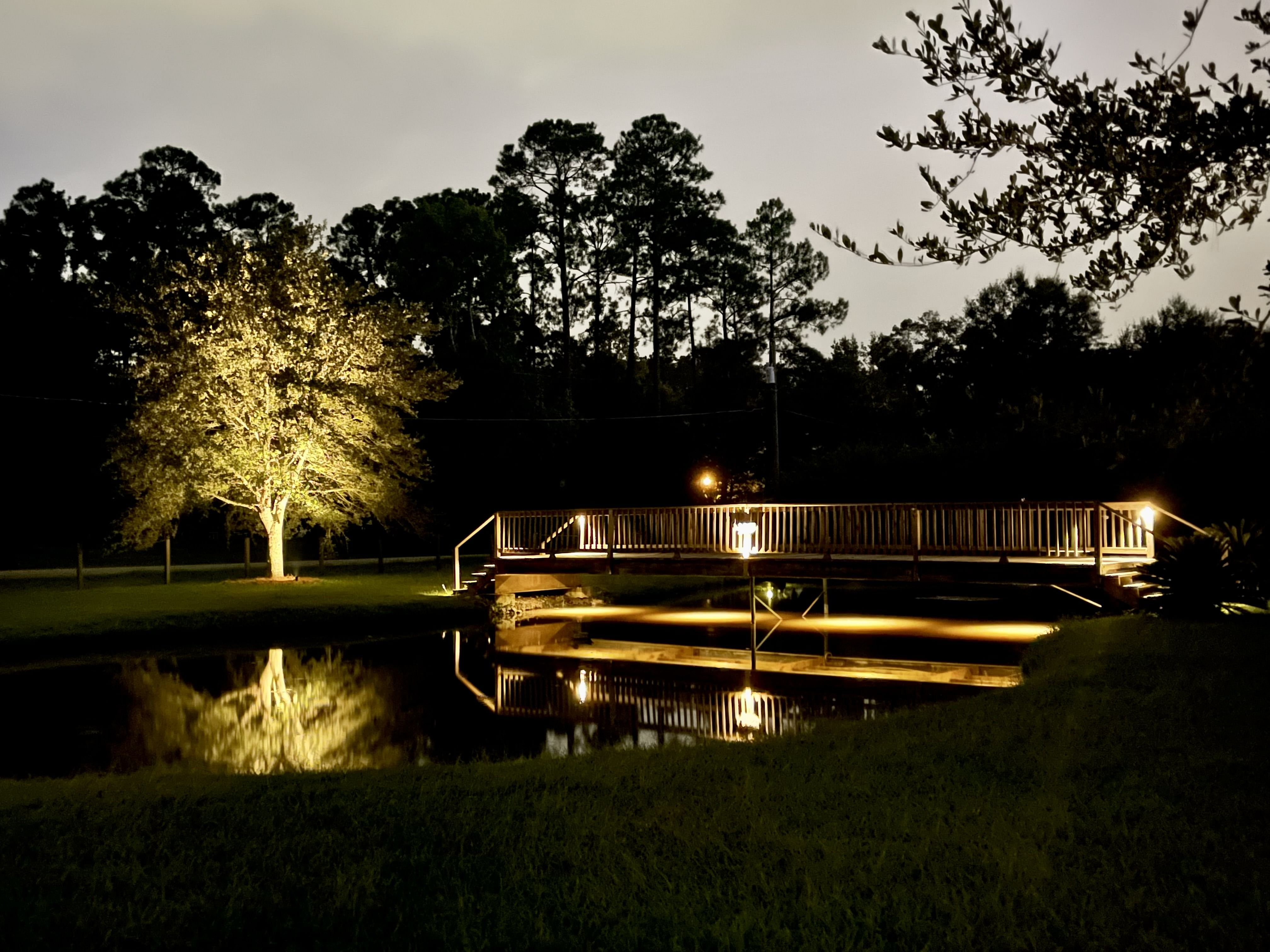

Lighting Built for the Walk Down to the Water
Most of the docks we get called about work perfectly well during the day, then become difficult to use once the sun goes down. The end of the deck is hard to see, the steps from the yard can disappear into the dark, and tying off a boat or unloading gear often means relying more on feel than sight. That is what good dock lighting is designed to fix. We handle both the lighting design and the installation, so we start by looking at how you actually use the dock at night. From there, we determine where the light should come from and how much is needed.
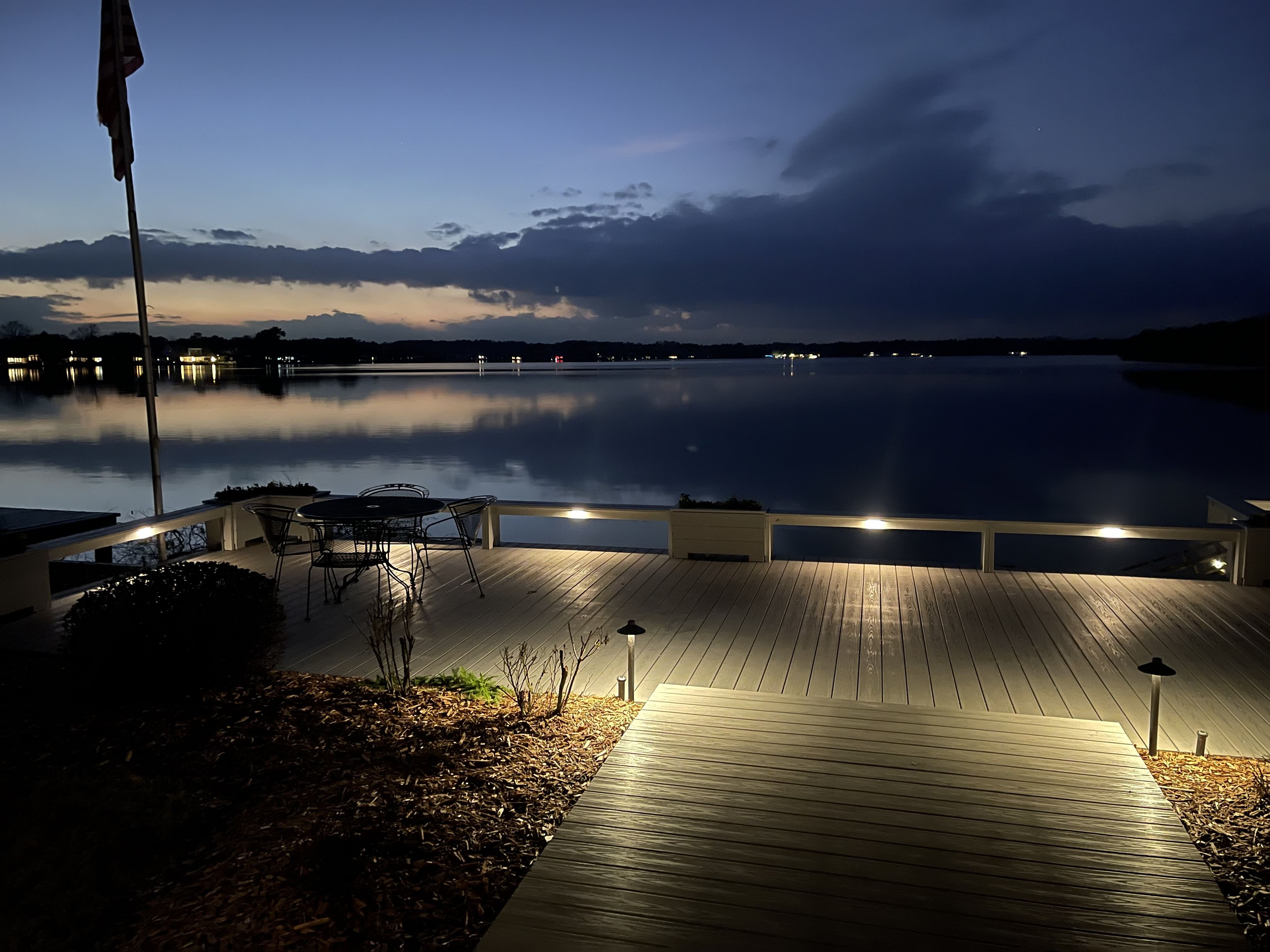
Fixtures can be installed in posts, along walkways, and around steps and landings to make the route from the house to the water easier to see. The goal is to light the deck, the path, and the areas where you enter or leave the dock without making the space feel harsh or overlit.
Covington, LA
What Dock Lighting Changes
A dock has different lighting needs than the rest of the property. You may be walking down a narrow path, stepping onto a lower deck, tying off a boat, fishing at night, or simply spending time at the end of the pier. The lighting needs to make each of those areas easier to navigate while clearly defining where the deck ends and the water begins.
It also needs to do that without creating unnecessary glare. Water reflects light much more noticeably than grass, landscaping, or other surfaces around the home, so a fixture that works well on a patio can feel far too bright when placed near the shoreline. Poorly aimed lighting can also throw light across the water toward neighboring properties.
We account for those conditions when choosing, placing, and aiming each fixture. The result is a dock that is easier to use after dark without flooding the water or the surrounding property with excess light.
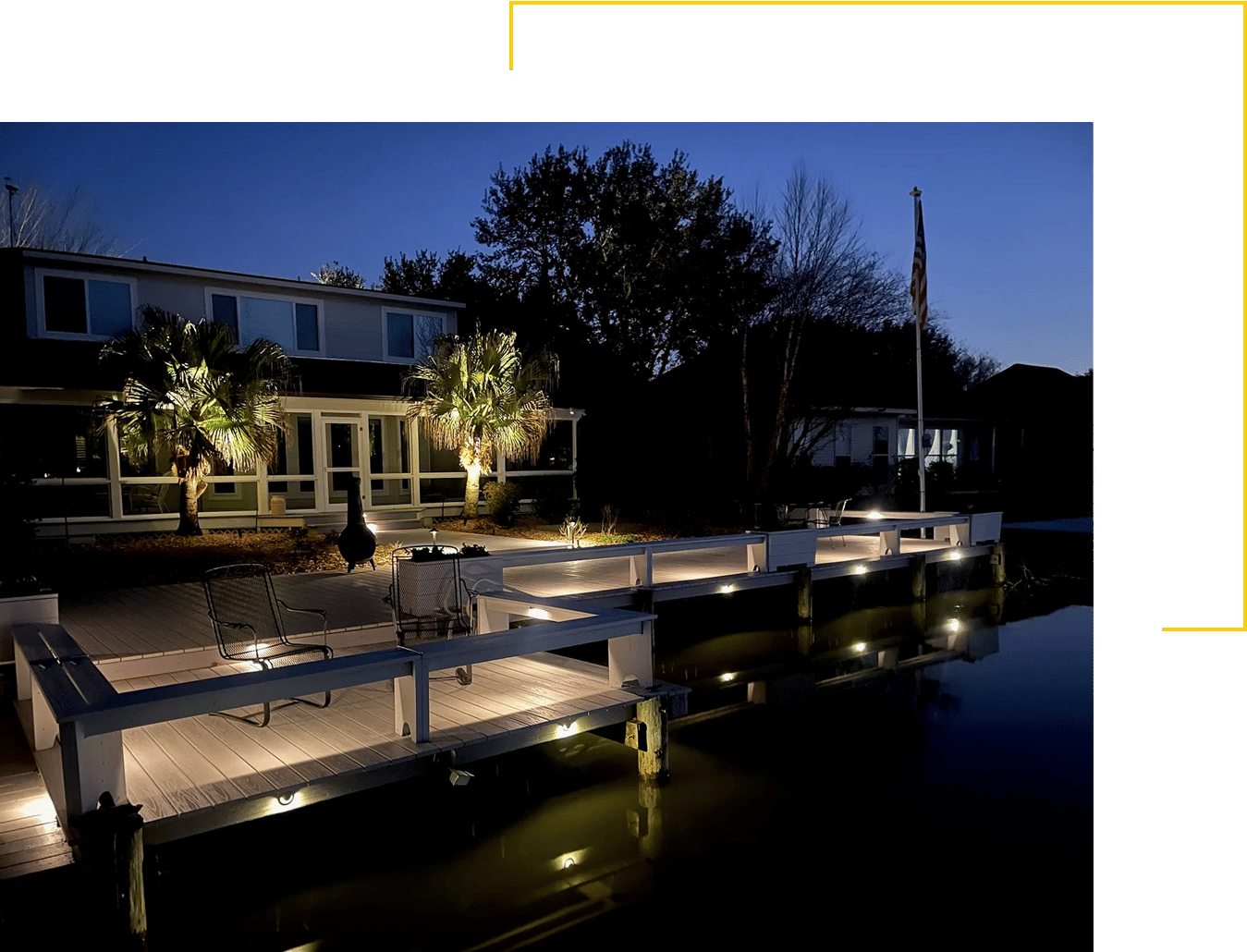
What Makes a Custom Dock Lighting Plan Worth It
Every dock is laid out differently. Some run straight out from the bank on a handful of pilings, some have an L-shaped end for a boat slip or a lift, and some sit low enough that the deck is only a foot or two above the water. A generic plan does not answer any of that. We walk the dock, look at how it's built, and figure out where a fixture actually needs to sit to light the walk, the steps, and the deck without putting light where it isn't wanted.
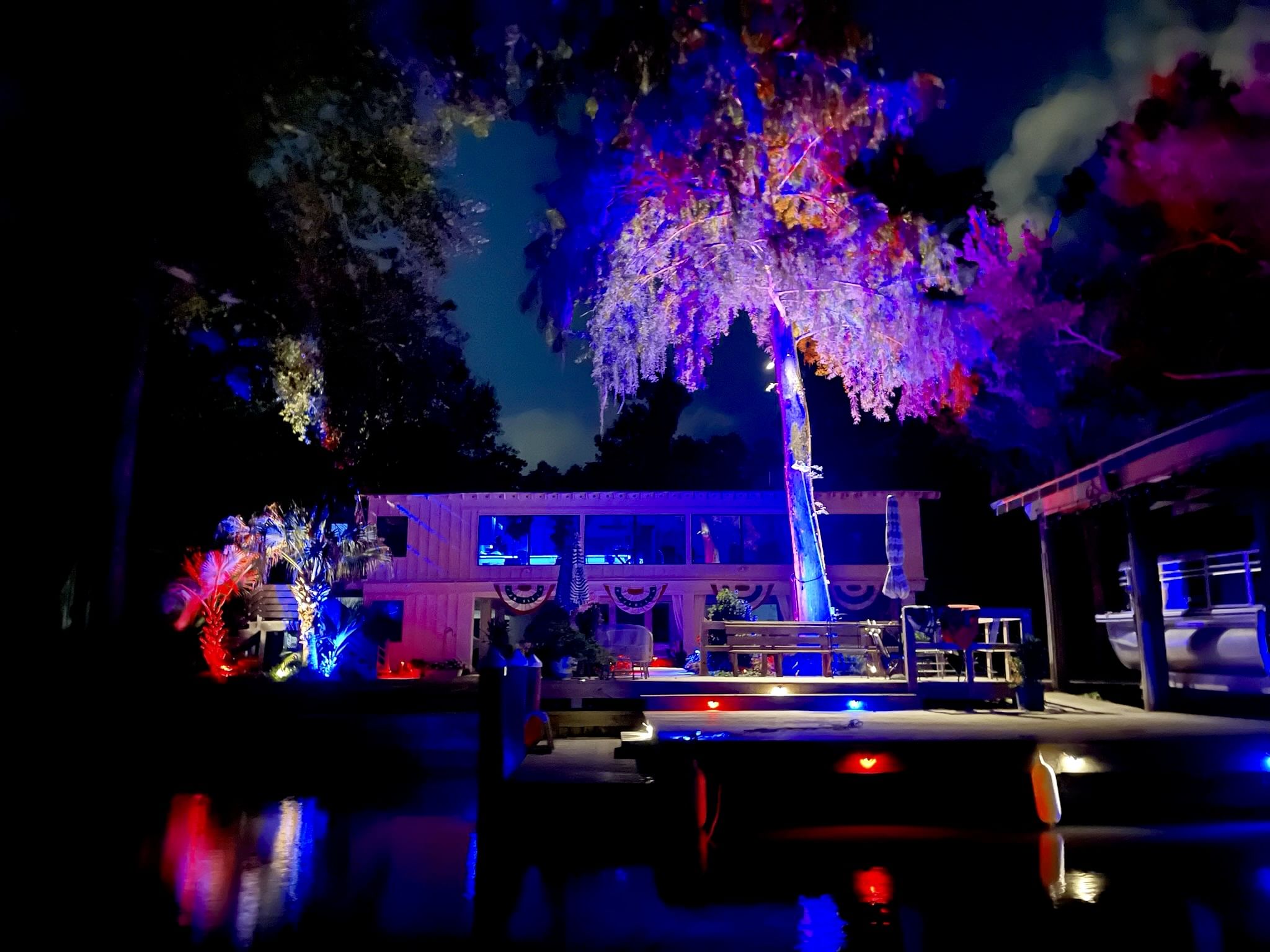
Dock Lighting for Covington, Mandeville, and the Northshore
LIT Outdoor Lighting is based in Covington along the Bogue Falaya, so many of the docks we work on are part of the rivers, bayous, and lakefronts that shape the Northshore. We design and install dock lighting throughout St. Tammany Parish, including Mandeville, Madisonville, Abita Springs, and Slidell. We also serve communities farther west in Tangipahoa Parish, including Hammond and Ponchatoula.
The right lighting plan depends heavily on the property itself. A lakefront dock in Mandeville or Slidell may need a different approach than a riverfront dock near Covington or Madisonville. Dock height, surrounding water, boat traffic, walkways, and access points all affect where fixtures should be placed and how much light the space needs.
What We Light on a Dock
Every dock is built a little differently, so the fixture list changes from job to job. These four are the ones that come up on nearly every dock lighting project we design.
Pilings and Posts
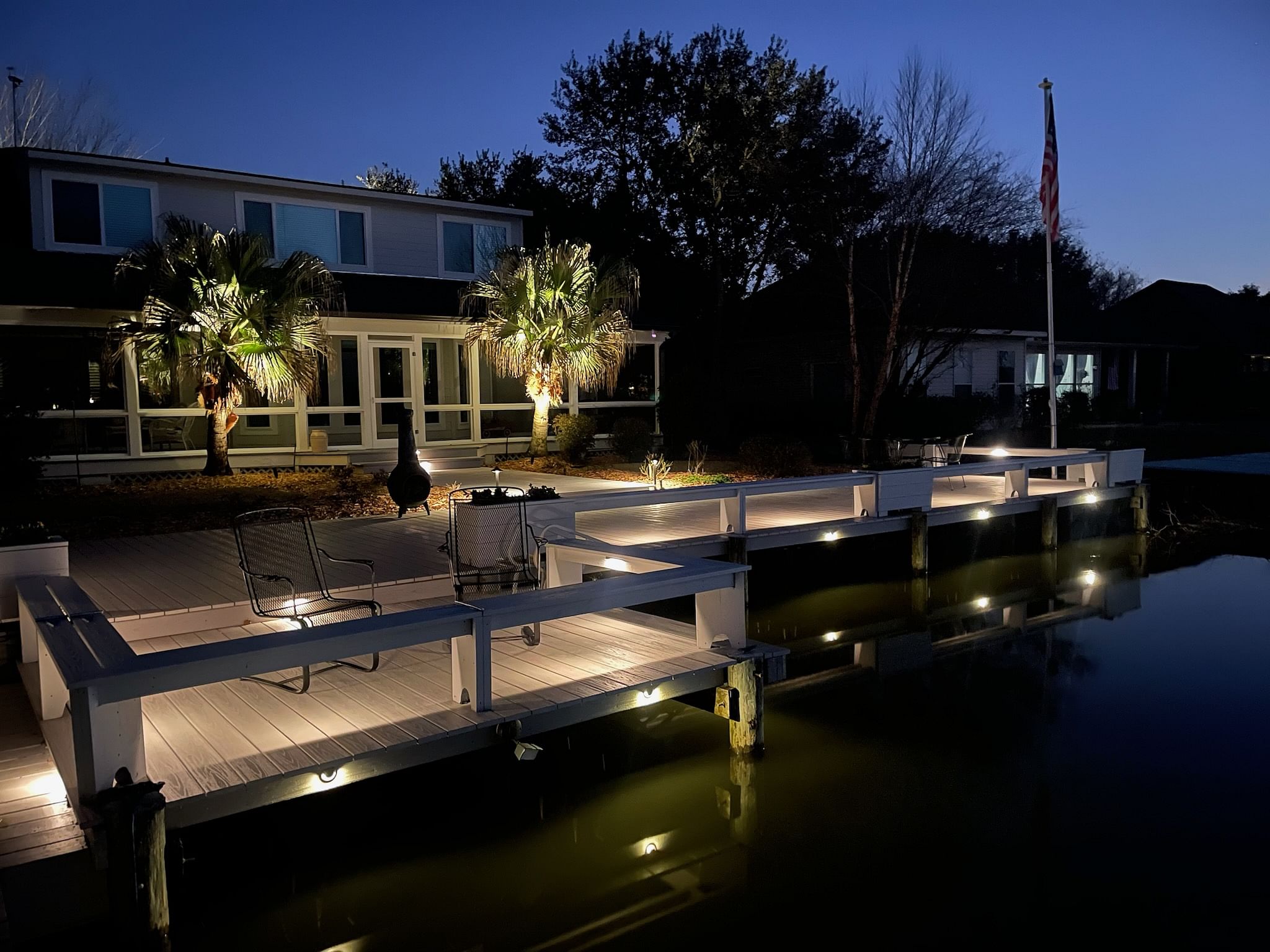
Fixtures mounted on the pilings mark the edge of the dock and the boat slip from a distance, so you can see the shape of the structure well before you're standing on it.
Walkway and Ramp
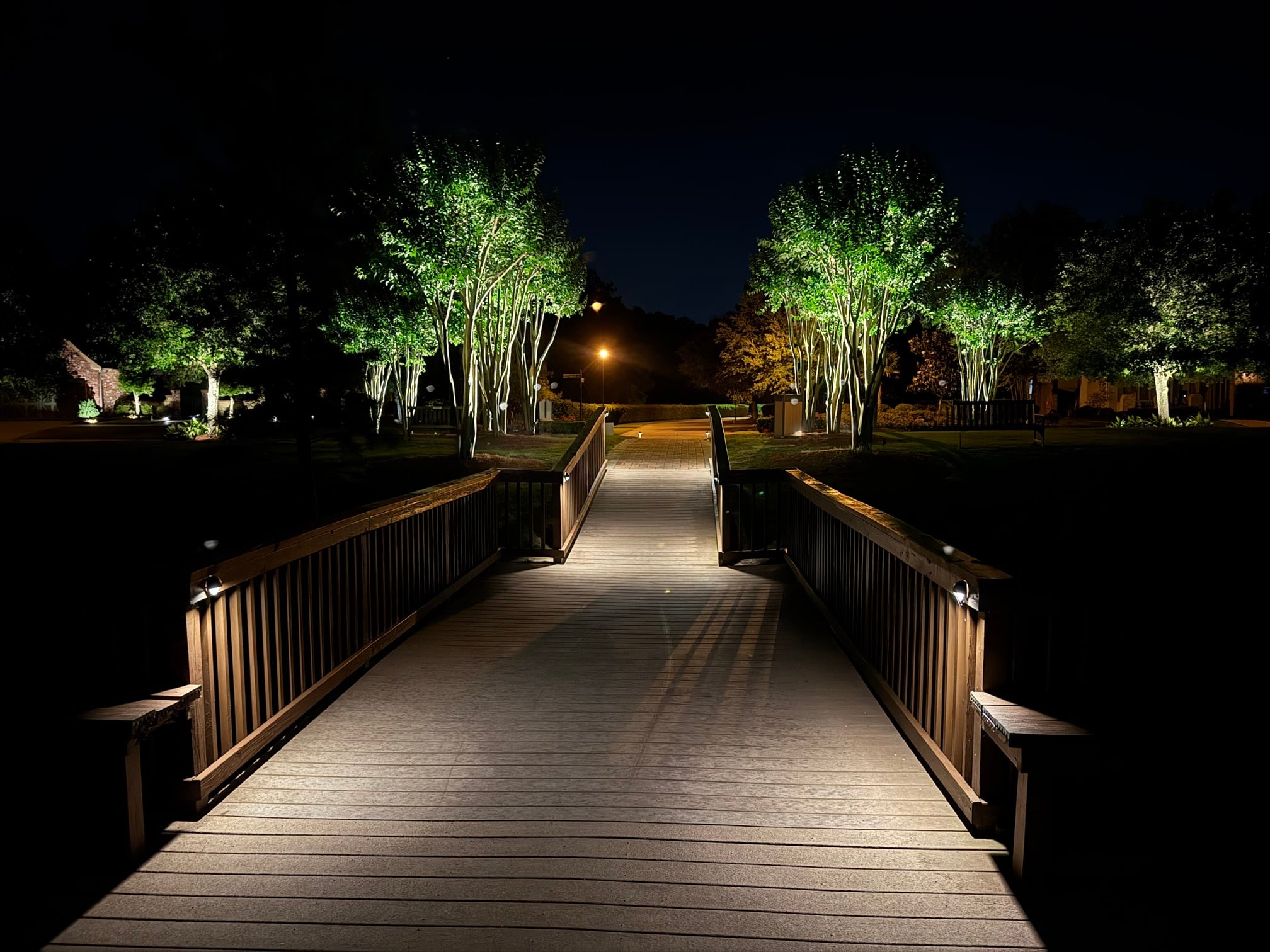
Low fixtures along the walkway out to the dock, and on any ramp or gangway where the elevation changes, keep the path underfoot visible the whole way from the yard to the water.
Steps and Landings
Every step down onto the dock or the lower deck gets marked, so the change in level is obvious instead of something you have to feel for.
Boat Lifts and Slips
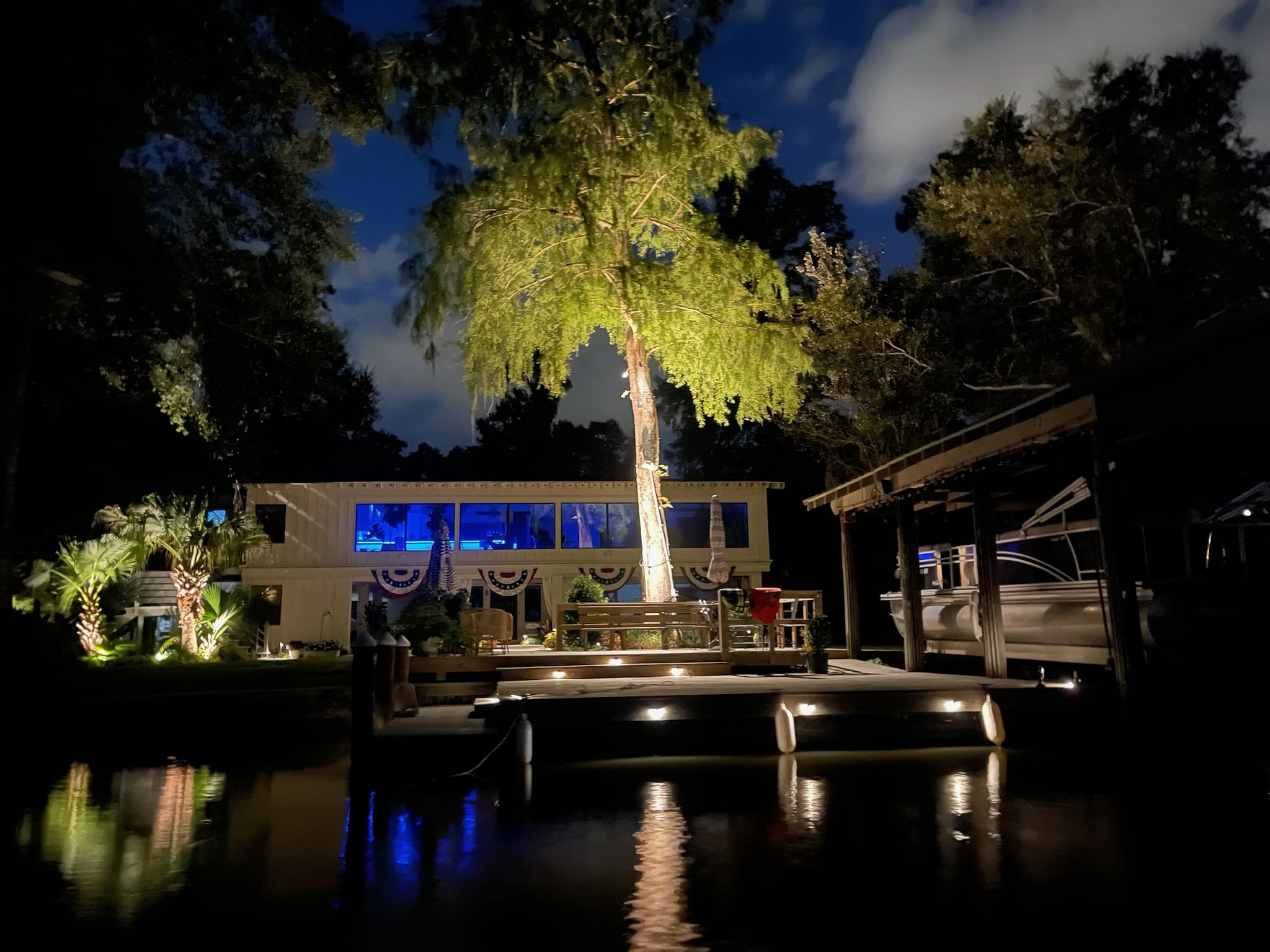
Lighting around a lift or a slip makes tying off, loading, and getting a boat in and out after dark easier and safer, without shining light straight into the water where it isn't needed.
How a Dock Lighting Project Goes
Every job runs through the same five stages, whether we're lighting a small fishing dock or a full boathouse and slip.
1
Design Consultation
Schedule a free consultation and walk the dock with us. Tell us how you use it and what's hardest to see out there after dark.
2
Custom Lighting Plan
We put together a lighting plan for the dock, fixture by fixture, based on its layout and how you use it.
3
Fixture & Specs
We select fixtures built for constant exposure to water and humidity, and specify exactly where each one goes.
4
Professional Installation
We install the system, running wire along the dock structure and setting each fixture in place.
5
Nighttime Adjustments
We come back after dark to aim and adjust every fixture. That visit is where a dock lighting plan actually comes together, since daylight tells you almost nothing about how light will sit on the water.
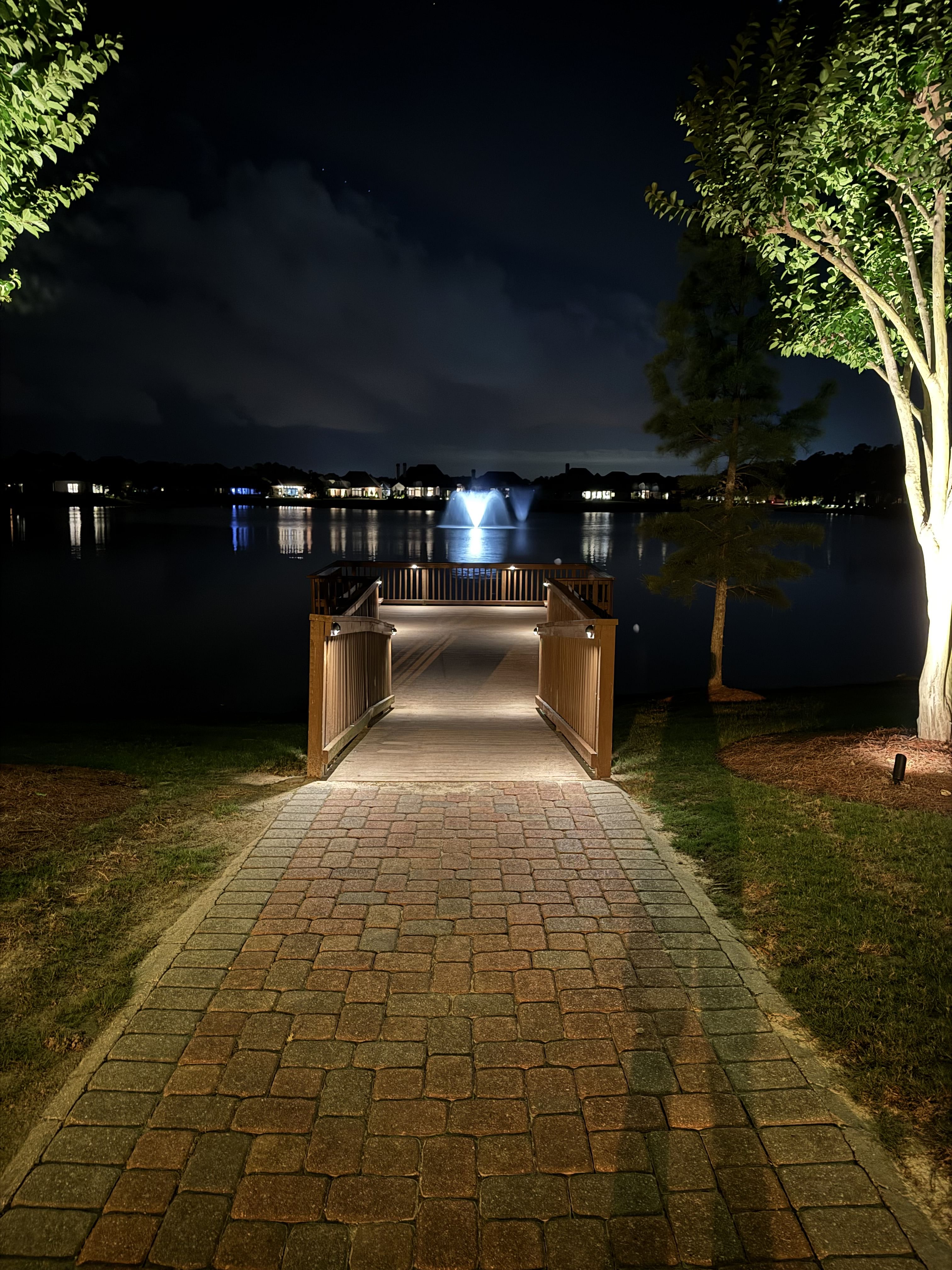
Connections Built for the Water
A dock puts every connection in a system closer to standing water than almost anywhere else on a property. We don't use wire nuts anywhere, because they aren't built to stay sealed once water finds them, and a connection failure on a dock is harder to reach and repair than one in a flower bed. Every connection we make is water-tight and can't be pulled apart.
Fixtures and Controls
We install commercial-grade fixtures only, run on low-voltage systems that stay far safer to work with around water than a standard household circuit. The system runs on a timer so it comes on and off on its own, and we'll show you how to adjust it.
Safety on the Walk to the Water
The biggest hazard on most docks after dark isn't the water, it's the walk to get there: an unlit step, a ramp with a slope you can't judge, or the exact spot where the yard ends and the dock begins. Those are the places we light first, before anything decorative, so the walk out is as easy to make at night as it is in daylight.
Keeping Glare Off the Water
Water throws light back up and carries it sideways in a way a lawn or a patio never does, so a fixture that's fine on dry ground can put glare straight into your eyes, or a neighbor's, once it's aimed anywhere near a dock. We shield and angle every fixture to light the deck and the walkway without sending light out across the surface of the water.
Keeping the System Right
A dock sees more wear than a typical yard: splash, standing humidity, and the rise and fall of the water all work on fixtures and connections over time. We check for that on the systems we maintain, along with the usual lens film and timer drift that any outdoor system picks up.
What You Get Out of It
Here's what changes on a property once the dock lighting is in and adjusted.
A Dock You Can Use After Dark
Tying off a boat, loading a cooler, or casting a line after sunset stops being a guessing game.
A Path You Can See the Whole Way
Every step and grade change between the house and the water is lit, so the walk out and back doesn't need a flashlight.
Light That Stays Off the Water
Shielded, aimed fixtures light the deck and the walkway instead of throwing glare across the surface.
A System Built for Constant Exposure
Commercial-grade fixtures and water-tight connections, installed for a spot that stays humid and gets splashed far more than the rest of the yard.
One Plan for the Whole Property
Dock lighting is designed alongside the path from the house, the landscape lighting, and anything else on the property, rather than added on its own.
Frequently Asked Questions
Yes, and that's most of what we do. Fixtures mount onto pilings, decking, and rail posts without requiring the dock to be rebuilt, and wiring runs along the existing structure to reach them.
Path lighting covers the walk from the house out toward the water. Dock lighting covers the structure itself once you're on it: the pilings, the deck, the steps, and the slip. Most properties need both, and we plan them together so the transition from one to the other is seamless.
Yes. That's what the low-voltage systems and water-tight connections are for. We don't use wire nuts anywhere in a dock installation, and the fixtures and wiring we use are built for constant exposure rather than adapted from a dry-land setup.
Yes. That's the environment we build for. Heat, humidity, splash, and the rise and fall of the water are exactly the conditions that find a weak connection or a thin fixture housing, so a dock system gets built to handle them from the start rather than added as an afterthought.
Yes. Lifts and slips usually get planned in the same pass as the rest of the dock, since the goal is a dock you can move around safely after dark, not just a few decorative fixtures.

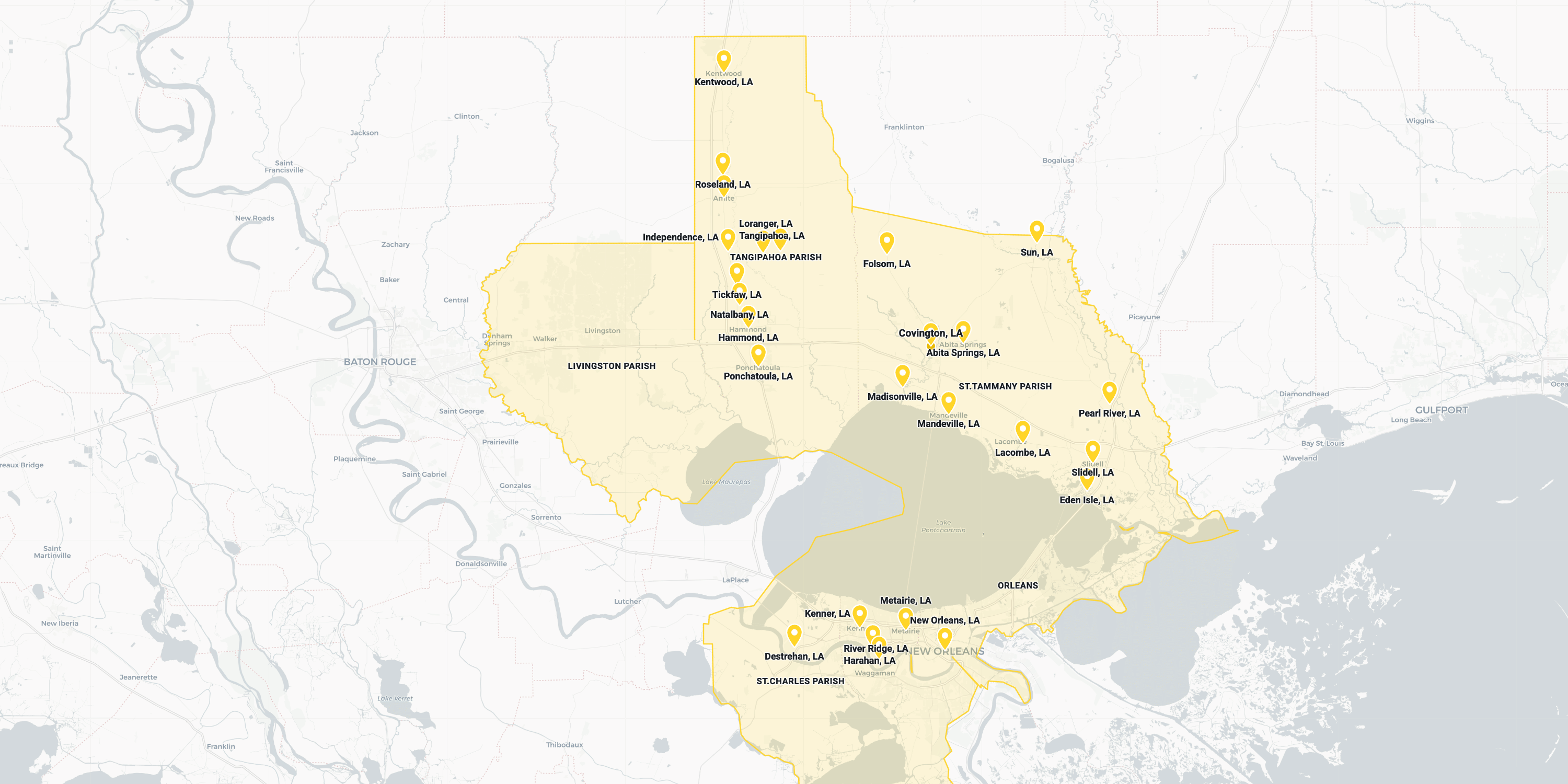
Areas We Serve Across Louisiana
-
Amite
-
Eden Isle and Bush
-
Folsom
-
Hammond
-
Natalbany
-
Pearl River
-
Ponchatoula
-
Independence
-
Kentwood
-
Lacombe
-
Loranger
-
Roseland
-
Sun
-
Tickfaw
Ready to See Your Dock at Night?
Give your dock the same attention as the rest of your property with professionally designed and installed lighting from LIT Outdoor Lighting. We build durable systems for waterfront environments that improve visibility, make the dock easier to use at night, and complement the rest of your outdoor lighting. Contact LIT Outdoor Lighting to schedule a consultation and plan a system around your dock, shoreline, and property.

Let Us Know About Your Project
Contact Details